


Choosing the Right Tech Stack for Enterprise Websites: A Strategic Guide
In this fast-paced digital landscape of 2026, an enterprise website is no longer just a digital business card; it is the central part of a global organization. If it is managing millions of concurrent users, integrating complex ERP systems, or ensuring ironclad security, the foundation of these capabilities lies in the technology chosen at the start.
Selecting the best tech stack for an enterprise website is a high-stakes decision that dictates your organization’s agility, security, and long-term profitability. At Element8, we understand that for Saudi Arabian enterprises looking to lead in the “Vision 2030” digital economy, the right architecture is the difference between market leadership and being hindered by technical debt.
What is an Enterprise Tech Stack?
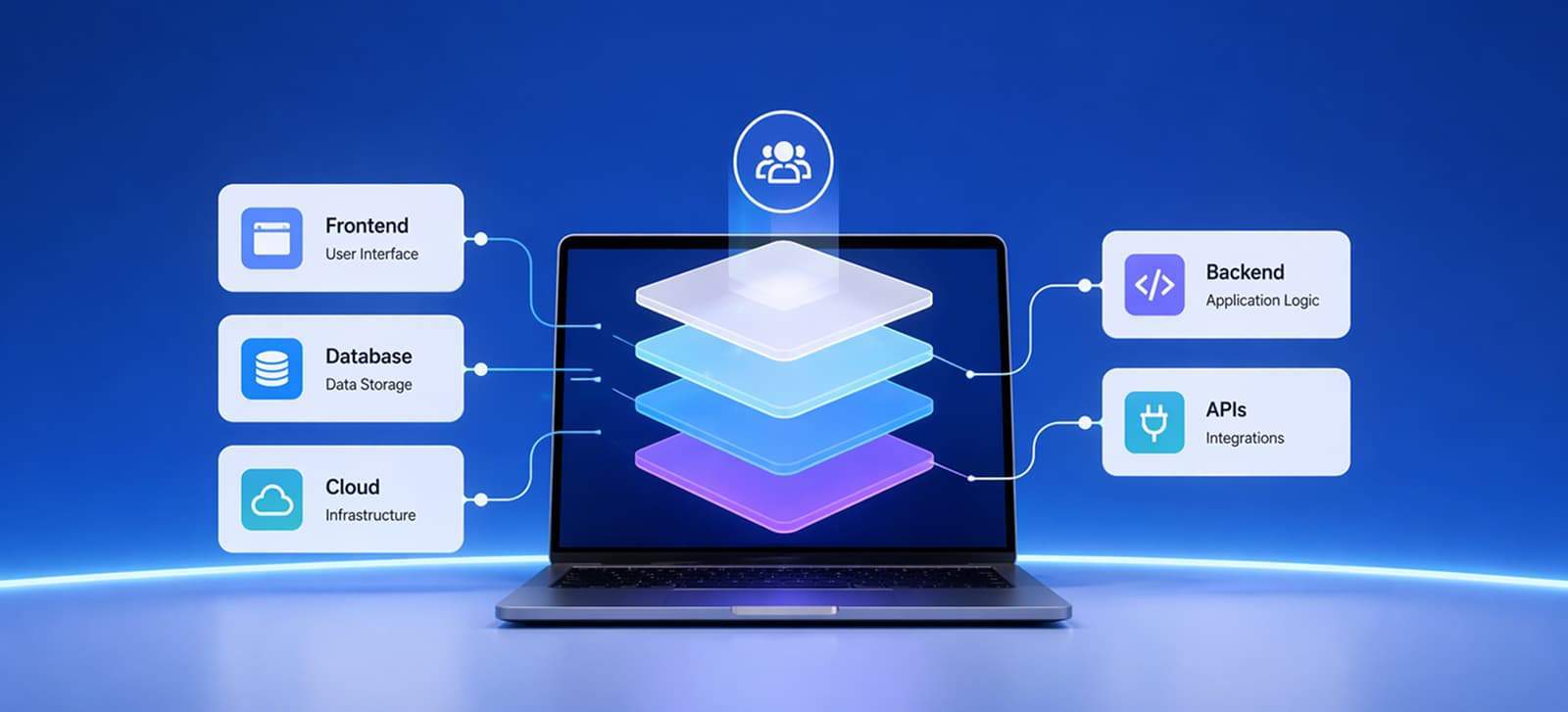
An enterprise tech stack is a comprehensive ecosystem of software, tools, and platforms utilized by a larger organization to build, manage, and run business applications and day-to-day operations. Unlike standard web stacks, an enterprise-grade solution is a layered structure of frontend, backend, data, and infrastructure technologies designed for extreme scalability, security, and high performance.
Technology alone is not enough; design plays an equally critical role in performance and conversions. Explore our detailed guide on enterprise website design best practices to understand how design and technology work together to drive business success.
In the industry, you may hear this referred to as:
- Solution Stack: The complete set of software technologies used to create a platform.
- Technology Stack: The specific combination of programming languages and frameworks.
- IT Ecosystem: A broader view including third-party SaaS and legacy integrations.
- Software Portfolio: The collection of digital assets managed by the enterprise.
Enterprise Complexity vs. Normal Websites
It is a common misconception that an enterprise website is simply a “larger” version of a standard site. In reality, the architecture requirements are fundamentally different.
Defining the Gap
Normal websites (standard business sites or blogs) typically serve as informational brochures or simple stores. They handle hundreds or thousands of visitors, and their primary goal is visibility.
Enterprise websites are critical tools in business infrastructure. They are designed to serve large organizations with thousands of employees and millions of global users. They handle complex internal workflows, support multiple product lines, and must remain operational 24/7.

Why Choosing the Right Tech Stack Matters
The impact of your enterprise web development tech stack extends beyond the initial launch. A strategic choice can accelerate growth, while a poor one creates a “legacy trap.”
- Scalability & Performance: The best tech stack for enterprise websites allows for both horizontal and vertical scaling. As traffic grows, your infrastructure must handle the load without degrading the user experience.
- Reduced Total Cost of Ownership (TCO): While some enterprise frameworks have higher initial setup costs, they reduce long-term maintenance. A well-architected stack minimizes “technical debt”, the cost of fixing quick-and-dirty code later.
- Enhanced Security & Compliance: For enterprises in Saudi Arabia, data residency and security are paramount. The right stack provides the framework for secure transactions and compliance with local and international regulations (like GDPR or Saudi PDPL).
- Faster Time-to-Market: Modern, modular stacks allow developers to use pre-built components, enabling the marketing team to launch new campaigns or features in days rather than months.
Core Components of the Best Tech Stack for Enterprise Websites
A scalable, enterprise-grade tech stack is not just a collection of tools; it is a layered architecture designed for resilience, performance, and long-term adaptability. Each layer can play a critical role in ensuring that failures in one component do not compromise the entire system. This modular approach enables businesses to scale easily, integrate emerging technologies, and maintain operational stability.
-
The Frontend Layer (Client-Side)
The frontend is the digital interface of your business, which directly influences user experience (UX), engagement, and conversion rates. In a modern enterprise, frontend architecture must prioritize speed, responsiveness, and maintainability.
- React: Widely regarded as the industry standard in 2026, React enables the development of dynamic, high-performance interfaces through reusable components. Its ecosystem (including Next.js) supports server-side rendering and improved SEO performance, critical for enterprise visibility. For enterprises looking to fully use this framework, partnering with a specialized Next.js web development company ensures optimal performance, scalability, and enterprise-grade architecture.
- Angular: Known for its opinionated structure, Angular enforces strict architectural patterns, making it well-suited to large-scale applications, especially in regulated industries like banking and finance, where consistency and maintainability are crucial.
- Vue.js: A flexible and lightweight alternative, Vue.js is ideal for enterprises seeking rapid integration or incremental adoption. Its simplicity, combined with performance, makes it a strong choice for scalable UI development.
Strategic Insight: A well-architected frontend reduces bounce rates, improves Core Web Vitals, and directly impacts revenue through better user journeys.
-
The Backend Layer (Server-Side)
The backend is the operational core of your platform. It processes business logic, handles authentication, and ensures seamless data flow between systems. Enterprise backends must be built for speed, security, and scalability.
- Node.js: Designed for asynchronous, event-driven architecture, Node.js excels in real-time applications such as chat platforms, streaming services, and collaborative tools. Its ability to handle high concurrency makes it ideal for modern digital products.
- Spring Framework: The backbone of enterprise-grade applications, Spring (especially Spring Boot) offers robust security, scalability, and integration capabilities. It remains the preferred choice for mission-critical systems in finance and large-scale enterprise environments.
- Django: Known for rapid development and clean architecture, Django is particularly powerful for data-driven platforms, AI integrations, and analytics-heavy applications. It comes with built-in security features and a strong ORM for database management.
Strategic Insight: Choosing the right backend framework is less about trends and more about aligning with business complexity, scalability goals, and long-term maintenance.
-
Data Management & Storage
Data is the backbone of enterprise decision-making. A modern tech stack must support both structured and unstructured data while ensuring integrity, speed, and scalability.
- Relational Databases (SQL): Solutions like PostgreSQL and Oracle Database are essential for applications where data consistency, relationships, and transactional integrity are non-negotiable, such as financial systems and ERP platforms.
- Non-Relational Databases (NoSQL): Tools like MongoDB provide flexibility for handling unstructured or semi-structured data. They are ideal for high-growth applications requiring rapid scaling and dynamic schemas.
Strategic Insight:
Most modern enterprises adopt a hybrid approach using SQL for transactional systems and NoSQL for scalability and flexibility.
-
Infrastructure & DevOps
Infrastructure is the foundation that powers performance, scalability, and reliability. DevOps practices ensure faster deployments, reduced downtime, and continuous innovation.
- Cloud Platforms: Industry leaders such as Amazon Web Services, Microsoft Azure, and Google Cloud Platform provide scalable infrastructure, global availability, and advanced services, including AI, analytics, and serverless computing.
- Containerization & Orchestration: Technologies such as Docker and Kubernetes enable consistent deployment across environments, improving reliability and reducing environment-specific issues.
- CDN & Caching: Solutions like Redis and Nginx optimize performance by reducing latency and ensuring faster content delivery across global audiences.
Strategic Insight: A mature DevOps ecosystem is what differentiates high-performing enterprises; it enables continuous delivery, minimizes downtime, and ensures scalability under peak loads.
A modern enterprise tech stack is not about choosing the “best” technologies; it’s about building the right combination that aligns with your business goals, scalability requirements, and user expectations.
The most successful organizations design their stack with flexibility in mind, allowing them to evolve, integrate AI, and adapt to future technological shifts without having to rebuild from scratch.
Best Tech Stacks for Enterprise Websites
The landscape of enterprise web development has moved from “all-in-one” solutions to modular, specialized architecture. The modern enterprise prioritizes high performance, AI integration, and edge computing to maintain a competitive edge. Based on these requirements, here are some important tech stacks currently dominating the industry.
-
The “Modern Standard”: Next.js + TypeScript + PostgreSQL
This has emerged as the definitive stack for high-traffic enterprise applications and content-heavy sites. By using Next.js for hybrid rendering (SSR/SSG), organizations can achieve superior SEO and lightning-fast page loads.
- Best For: SaaS platforms, global e-commerce, and content-driven enterprise sites.
- Why it works: TypeScript ensures type safety across large development teams, reducing bugs, while the Vercel Edge Network ensures content is delivered from the server closest to the user.
-
The AI-Ready Stack: Python + Django/FastAPI + React
As artificial intelligence becomes a core feature of enterprise tools, this stack is the preferred choice for data-heavy organizations.
- Best For: AI-driven applications, complex analytical dashboards, and platforms requiring advanced security.
- Why it works: Python provides seamless integration with industry-leading AI libraries (such as TensorFlow and PyTorch), while Django offers a “batteries-included” approach to security and user management.
-
The Interactive Specialist: MERN/MEAN Stack
By using JavaScript or TypeScript across the entire stack, the MERN (MongoDB, Express, React, Node.js) and MEAN (MongoDB, Express, Angular, Node.js) stacks streamline the development lifecycle.
- Best For: Real-time dashboards, collaborative tools, and interactive SaaS platforms.
- Why it works: Node.js’s non-blocking I/O enables high concurrency, making it ideal for applications handling thousands of simultaneous user actions.
-
The Corporate Powerhouse: .NET + SQL Server/PostgreSQL
For large-scale internal systems that require ironclad stability and deep integration with existing Microsoft ecosystems, the .NET Framework remains the gold standard.
- Best For: Internal business applications, high-performance APIs, and legacy-sensitive corporate environments.
- Why it works: It offers a mature, high-performance environment with world-class support for enterprise-grade security protocols.

Modern Trends in Enterprise Tech Stacks
As we are moving through 2026, we see a distinct shift away from monolithic systems toward modularity.
-
MACH Architecture
MACH stands for Microservices, API-first, Cloud-native, and Headless. This is the gold standard for high-growth enterprises. It allows you to swap out parts of your stack (like a CRM or a search engine) without rebuilding the entire website.
-
Headless CMS Enterprise
A headless CMS enterprise solution decouples the content management (backend) from the presentation layer (frontend). This allows the same content to be pushed to a website, a mobile app, and an IoT device simultaneously.
-
Composable Architecture
Instead of buying a single “all-in-one” platform, enterprises are now “composing” their stack from best-of-breed tools for each function (e.g., Algolia for search, Stripe for payments, and Contentful for CMS).
Real-World Use Cases & Recommended Stacks
E-commerce Enterprise Stack
Large-scale retail requires extreme speed and the ability to handle massive traffic spikes during seasonal sales.
- Recommended Stack: Headless Commerce + Next.js (React) + Node.js + PostgreSQL.
- Key Tools: Redis for caching, Elasticsearch for product search, and Nginx as the web server.
SaaS Platform Stack
Software-as-a-Service requires high uptime and multi-tenancy (serving multiple clients from a single installation).
- Recommended Stack: MERN Stack (MongoDB, Express, React, Node.js) for high interactivity.
- B2B Enterprise Focus: Angular + ASP.NET Core + Azure for deep integration with Microsoft ecosystems.
Corporate Website Stack
Focuses on global content governance, SEO, and security.
- Recommended Stack: Headless CMS + Static Site Generator (Next.js/Nuxt.js).
- Traditional Alternative: A highly optimized LEMP stack (Linux, Nginx, MySQL, PHP) running a secure Drupal or WordPress installation.
How to Choose the Right Tech Stack for Your Organization
There is no “one-size-fits-all” in enterprise development. The choice must be data-driven.
- Define Project Requirements: Do you need real-time updates? Global multi-language support? Deep ERP integration?
- Scalability Needs: Can your stack handle 10x your current traffic? If not, look toward horizontal scaling with Kubernetes.
- Team Expertise: Your internal talent pool matters. Choosing a niche language might lead to high hiring costs and development bottlenecks.
- Security & Compliance: Ensure the enterprise frontend frameworks and backend tools you choose have built-in security features and active community support for patches.
- AI & Future-Readiness: In 2026, AI is non-negotiable. Choose stacks that easily integrate with Python-based AI models for personalization and predictive analytics.

The Future of Enterprise Web Technology Starts with the Right Stack
Choosing the right tech stack for enterprise websites is a balancing act between advanced performance and long-term stability. While the MERN stack offers incredible speed for interactive apps, the Java-Spring stack might be necessary for the heavy data requirements of a financial institution.
The trend in 2026 is clear: flexibility through MACH and headless CMS enterprise solutions is the path to staying competitive. However, the best technology is the one that aligns with your specific business goals, security requirements, and team capabilities.
Ready to build a future-proof digital infrastructure? Don’t leave your technology foundation to chance. Partner with Element8, the leading digital agency in Saudi Arabia, to design and deploy a high-performance enterprise web solution tailored to your vision.