


AI App Development, UX Design & Performance Optimization: How to Build Future-Ready Digital Applications
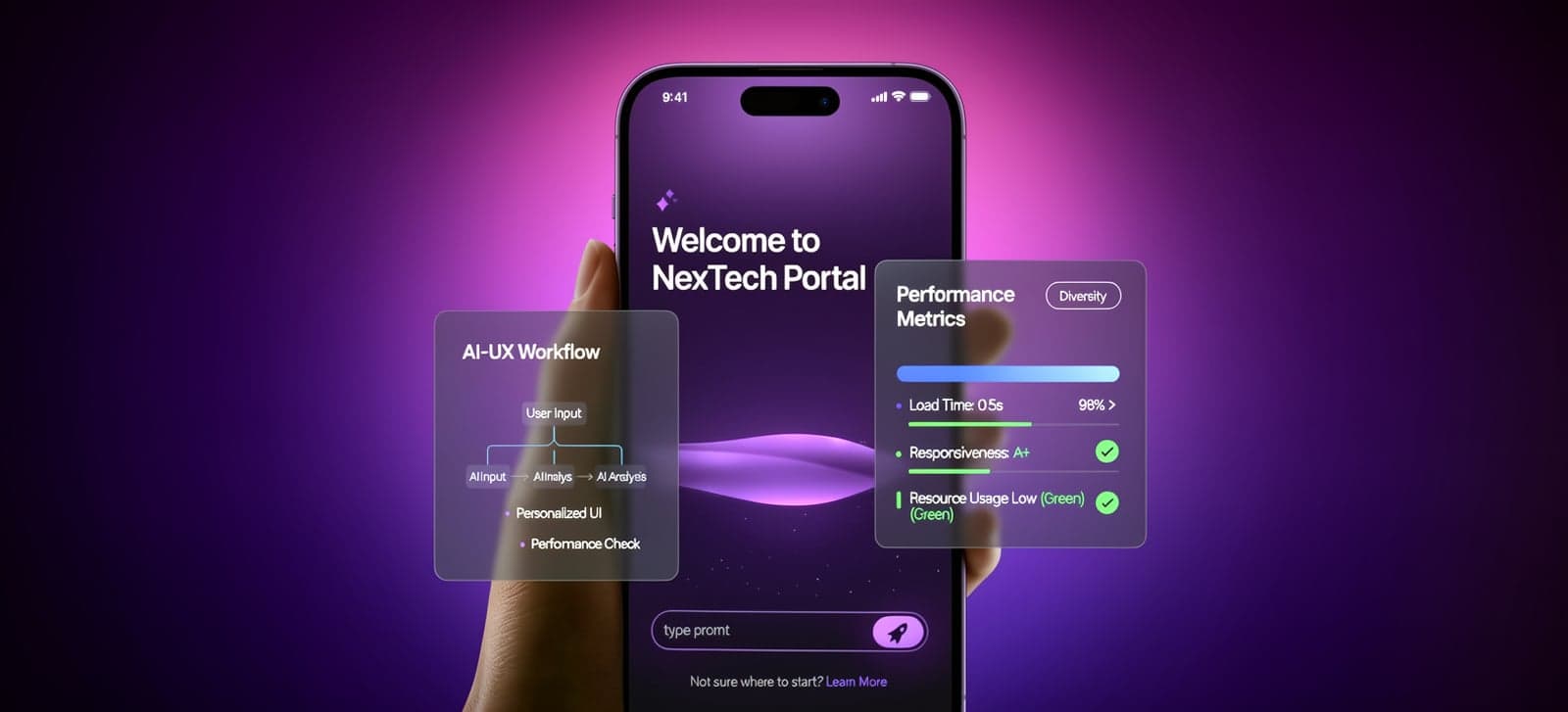
User expectations for digital applications have evolved significantly over the past decade. Enterprise users now expect platforms that are intelligent, adaptive, and consistently high-performing across every interaction. They demand fast, personalized, and intuitive experiences across web and mobile environments, with applications that understand user behavior, anticipate needs, and respond in real time.
Functionality and basic usability are the main approaches for traditional development. However, these methods are no longer sufficient in a data-driven, AI-enabled digital environment driven by intelligent automation, data-driven insights, and high-performance standards. Modern organizations are now demanding applications that can combine advanced technologies with an easy user experience.
This shift has elevated three strategic pillars to the forefront of digital strategy: AI app development, UX design for web and mobile apps, and app performance optimization. These three pillars are now the core of future-ready app development. Together, they can enable organizations to build scalable, intelligent, and high-performing digital solutions designed for long-term success.
What Makes a Strong Web & Mobile App
A strong digital application is built on technical reliability, user-centric design, and intelligent capabilities. Organizations today should focus on developing platforms that can scale efficiently while delivering consistent performance and user satisfaction.
Modern applications need scalability and flexibility. As user bases grow and demand for operating systems increases, applications must handle higher workloads without compromising performance. Could native architectures and modular development approaches enable applications to adapt to evolving business requirements?
Equally important is the UX design for web and mobile apps, which ensures applications remain intuitive and easy to use. A well-designed user interface can improve engagement, reduce friction, and enhance overall customer satisfaction.
Speed and reliability are also important when it comes to application success. App performance optimization ensures faster load times, easier interactions, and consistent functionality even under heavy traffic.
Security and data protection are fundamental requirements for modern applications. As data privacy regulations become more stringent, organizations should implement stronger security frameworks to protect user information and maintain compliance.
Finally, AI-driven personalization can enable applications to provide customized experiences. By analyzing user behavior and preferences, AI technologies help create adaptive interfaces that can improve user engagement and retention.

Step-by-Step Development Process for Future-Ready Apps
Key Stages in the Development Process
- Discovery & Strategy Planning
Future-ready app development starts with clearly defining business objectives and user expectations. Organizations should identify whether the application aims to automate repetitive tasks, enable predictive insights, deliver personalized recommendations, or detect anomalies in real time. Establishing these goals early helps guide design decisions, technical architecture, and AI integration strategies.
- Market Research & Feasibility Analysis
Before development begins, thorough market research will ensure the application is both technically feasible and commercially viable. This includes analyzing competitors, understanding user pain points, identifying experience gaps, and exploring opportunities where AI-powered features can deliver measurable value.
- UX Research & Design
Effective UX design for web and mobile apps is critical to making AI interfaces intuitive and accessible. This stage involves studying user behavior, mapping customer journeys, creating wireframes, and designing AI user interface elements such as personalized recommendations, predictive dashboards, and smart notifications.
- Data Collection & Preparation
Successful AI app development depends heavily on high-quality data. Organizations should identify required datasets, classify structured and unstructured data, and prepare it for processing. Proper data preparation can enable AI systems to deliver accurate predictions, meaningful personalization, and reliable decision-making.
- AI Integration & Architecture Planning
At this stage, development teams can define how AI capabilities will be embedded within the application. This will include selecting appropriate technologies such as machine learning, natural language processing, and computer vision, while designing scalable data workflows and system architectures to support real-time AI functionality.
- AI Model Training & Development
Training the AI model is a crucial step in building intelligent applications. Developers continuously train, test, and refine models to improve accuracy, reduce bias, and ensure adaptability as new data is introduced. Well-trained AI systems form the foundation of effective AI interfaces and predictive digital experiences.
- Development & Testing
The application is then built using modern frameworks and secure coding practices. Continuous testing ensures AI features function correctly, deliver accurate outputs, and remain reliable under varying workloads and user scenarios.
- App Performance Optimization & Deployment
Before launching, teams should implement comprehensive app performance optimization strategies to ensure fast loading speeds, scalability, and system stability. Deployment includes integrating AI systems, conducting quality assurance testing, and ensuring secure operation in web and mobile environments.
- Continuous Monitoring & Optimization
Future-ready applications will require ongoing improvements after launch. Analytics tools are used to monitor user behavior, track AI performance, refine models, and ensure compliance with evolving data privacy standards. Continuous optimization ensures the application remains adaptive, intelligent, and aligned with changing user expectations.
What is AI in UX Design
AI in UX refers to the integration of artificial intelligence into the user experience design process, enhancing usability, personalization, and efficiency. It integrates traditional design principles with data-driven insights to create adaptive and intelligent interfaces.
Unlike conventional UX design, which relies mainly on predefined user flows, AI-driven UX uses real-time data to predict user behavior and dynamically customize experiences. This will allow applications to respond to individual user requests.
What is the Evolution of AI in UX Design?
The role of artificial intelligence in UX design has transformed significantly, changing how digital experiences are created, personalized, and optimized.
Key Stages in the Evolution:
- Rule-Based UX Systems: Early UX design relied on static interfaces and predefined workflows. These systems will offer limited personalization and follow fixed interaction patterns.
- Machine Learning Integration: The adoption of machine-learning-enabled applications enabled analysis of the shift toward data-driven UX design.
- Personalized AI-Driven Interfaces: Modern AI interfaces enable applications to dynamically adjust layouts, content, and interactions based on real-time user data and contextual insights.
- Conversational & Adaptive UX: Technologies like voice assistants, chatbots, and adaptive user interfaces introduced more natural and interactive digital experiences.
AI-Powered UX Design Tools: Today, AI tools can support designers by automating repetitive tasks, generating usability insights, and improving testing efficiency.
How AI Will Shape the Future of UX Design in Digital Applications
Artificial intelligence is transforming UX design from a manual, static process into a dynamic, data-driven, and highly personalized discipline. The future of UX can be defined by intelligent interfaces that continuously adapt to user behavior, automate complex design processes, and provide more inclusive digital experiences.
- Predictive UX and Hyper-Personalization
AI will enable applications to anticipate user requirements before they are explicitly expressed. By analyzing behavioral patterns, preferences, and interaction history in real time, digital platforms can deliver highly personalized experiences, such as tailored product recommendations, customized content feeds, and adaptive navigation.
- Automation of Repetitive Design Tasks
AI-powered tools can automate time-consuming tasks such as wireframing, UI component generation, usability testing, and prototyping. This will allow designers to focus more on strategic decision-making, creativity, and user empathy rather than manual production tasks.
- Data-Driven UX Insights and Continuous Optimization
AI will enhance UX decision-making by instantly analyzing user interactions, heatmaps, feedback data, and engagement metrics. This can enable designers to identify usability issues faster and also optimize digital experiences based on real behavioral insights rather than assumptions.
- Emotion-Aware and Contextual Interfaces
Advanced AI systems can analyze voice tone, facial expressions, and behavioral signals to understand user sentiments. This will enable applications to respond more empathetically, creating more human-centred and emotionally intelligent digital interactions.
- Enhanced Accessibility and Inclusive Design
AI will play a major role in improving digital accessibility by enabling features like voice navigation, real-time translation, automatic captioning, and adaptive interfaces for users with diverse abilities.
- Evolution of the UX Designer Role
The role of UX designers will be shifting from manual interface creation to strategic experience orchestration. While AI will handle sleep, scale, and data processing, human designers will focus more on creativity, ethical judgment, and designing meaningful user journeys.
- Rise of Conversational and Invisible Interfaces
AI-driven applications will be increasingly moving towards natural language interactions, voice-based controls, and conversational UI. This will reduce reliance on traditional button-heavy interfaces and create more intuitive user experiences.
Challenges and Considerations of AI-Powered UX Design
While AI-powered UX design offers significant advantages, organizations must address several practical challenges to ensure effective implementation and sustainable performance.
- Data Privacy Risks
AI-driven UX relies mostly on user data to enable personalization and intelligent interactions. Organizations should implement stronger data protection frameworks, ensure regulatory compliance, and maintain transparent data usage policies to build user trust.
- Bias in AI Systems
AI algorithms can learn from historical data, which may sometimes contain biases. Continuous monitoring, ethical AI governance, and transparent model evaluation are necessary to ensure fairness and reliability in user experiences.
- Over-Automation Concerns
Excessive automation can reduce human control and limit flexibility in user interactions. Organizations should balance AI automation with human-centered design principles to maintain intuitive and adaptable user experiences.
- Performance and Speed Impact
AI-powered features can increase processing complexity and slow down applications if not implemented efficiently. Proper app performance optimization, including scalable architecture and efficient data handling, is critical to maintaining fast and responsive digital experiences.

How Element8 Builds Future-Ready Apps
Element8 integrates AI app development, advanced UX strategies, and performance-driven architecture to build scalable digital solutions for modern enterprises. Their approach primarily focuses on integrating intelligence, usability, and reliability throughout the application development process. With extensive experience delivering AI-powered enterprise applications across Saudi Arabia, Element8 combines technical expertise with UX innovation to build scalable digital solutions.
The company follows UX-first design principles, ensuring that UX design for web and mobile apps prioritizes user requirements, accessibility, and intuitive navigation. This approach can improve user engagement and enhance digital experiences. Element8 combines AI app development, advanced UX strategies, and performance-driven architecture. Future-ready app development involves building scalable, intelligent, and high-performance applications that adapt to evolving technologies and user expectations.
Element8 also emphasizes performance-driven development. By implementing scalable architectures and continuous monitoring strategies, we ensure applications remain fast, secure, and reliable.
Through cross-functional collaboration between designers, developers, and AI specialists, Element8 delivers future-ready app development solutions that can support long-term business growth.
Work with Element8 to create intelligent, user-centric, and high-performing applications designed for long-term success. Contact our team today to explore your requirements.