For a brokerage, developer, property manager, or investment business, the website may also connect listings with enquiry forms, WhatsApp, CRM systems, maps, marketing campaigns, reporting, and internal teams. That makes the project closer to a digital sales platform than a simple brochure site.
The right scope depends on the business model, property data, audience, integrations, bilingual requirements, and operational workflow. This guide explains the main features, cost drivers, and platform decisions to consider before starting a real estate website project in Saudi Arabia.
What a real estate website should achieve
A useful property website should support four connected outcomes:
- Help visitors discover suitable properties quickly.
- Build confidence through accurate information, professional presentation, and clear company details.
- Convert interest into a qualified enquiry, viewing request, call, or message.
- Give the business a manageable way to update listings, follow up on leads, and measure performance.
The website should be planned around the enquiry journey rather than only around the company’s departments. A visitor may begin with a location, property type, budget, development, or investment goal. The information architecture should reflect those questions.
Core features for a Saudi real estate website
Search and filtering
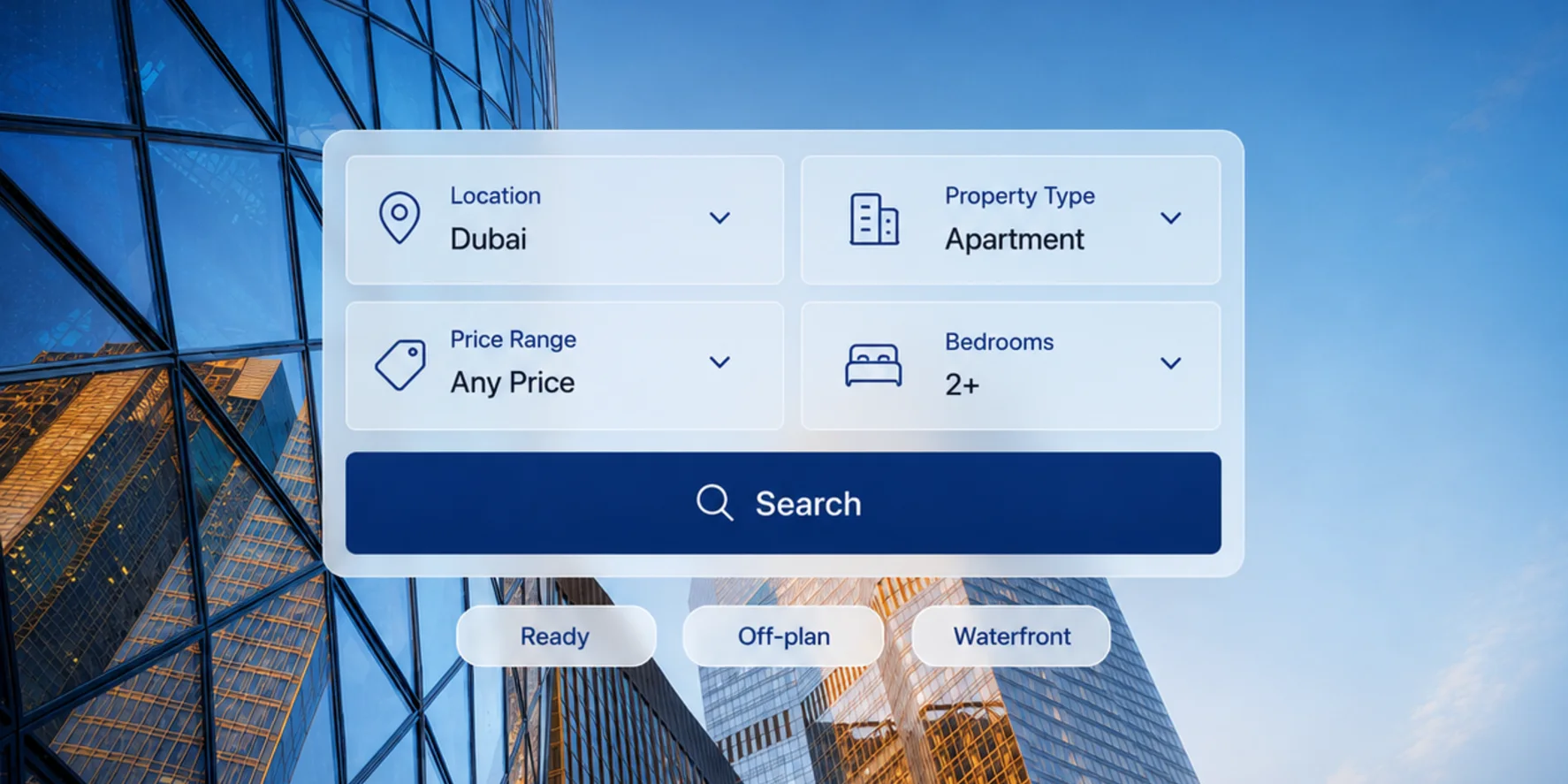
Property search is often the central experience. Useful filters may include location, property type, purpose, price range, bedrooms, area, status, completion date, and selected development. Filters should be easy to use on mobile and should not create confusing or indexable duplicate URL combinations without a clear SEO plan.
Property detail pages
Each property or development needs a clear page with accurate facts, image galleries, floor plans where appropriate, location information, availability status, amenities, payment or enquiry guidance, and a clear next action. A page should make it easy to save a property, request a viewing, ask a question, or contact the relevant team.
Location and map experience
Real estate decisions are strongly connected to location. Maps, nearby landmarks, transport information, district context, and service-area explanations can improve usefulness. Map integrations should be evaluated for performance, privacy, mobile usability, and licensing rather than added automatically.
Enquiry and lead qualification
Forms should collect enough information for a useful response without creating unnecessary friction. Depending on the business model, useful fields may include the visitor’s preferred property, purpose, location, timeframe, and contact method. The form should explain what happens next and route the enquiry to the right team.
WhatsApp, phone, email, and viewing-request paths should be consistent. A blank WhatsApp handoff can lose context, so the message and routing process should be planned with the CRM or sales workflow.
Bilingual and mobile UX
Saudi real estate audiences may move between Arabic and English experiences. Arabic should not be treated as a late translation layer. Direction, typography, forms, navigation, property terminology, filters, and content length should be tested in RTL as well as LTR layouts.
The mobile experience deserves its own review. Visitors may discover a property through search, social media, paid campaigns, or a shared message on a phone. Images, filters, contact buttons, forms, maps, and page speed must work at the point of decision. Element8’s responsive web design guidance for Riyadh explains why this requires more than shrinking a desktop layout.
For bilingual projects, the Arabic website localization guide is a useful reference for planning RTL layouts, language switching, terminology, and culturally appropriate content rather than treating Arabic as a late translation task.
Content management and listing operations
The team should be able to add, update, archive, and correct listings without creating duplicate or outdated pages. The CMS should support structured fields for property facts rather than storing everything as unstructured text. Roles, approvals, change history, and publishing responsibilities become more important when several teams manage listings.
Integrations to consider
The required integrations depend on the organization, but common areas include:
- CRM and lead-routing systems
- Property listing or inventory feeds
- Maps and location services
- Marketing automation and email workflows
- Analytics, conversion tracking, and call or WhatsApp measurement
- Document, booking, or viewing-request workflows
- Payment or reservation systems where relevant
- Internal reporting and data exports
Integration planning should begin before the visual design is finalized. The team needs to understand which system owns each piece of data, how updates are synchronized, what happens when a property becomes unavailable, and how failed submissions are detected.
Real estate website cost in Saudi Arabia
There is no responsible single price for real estate website development without knowing the scope. A small corporate website with a limited number of manually managed pages is fundamentally different from a searchable property portal connected to inventory, CRM, maps, marketing tools, and bilingual workflows.
The main cost drivers usually include:
- Number and complexity of templates
- Property search, filtering, comparison, and saved-item features
- Listing data model and inventory management
- Integrations and API requirements
- Arabic-English and RTL requirements
- CRM, lead-routing, and notification workflows
- User roles, approvals, and content governance
- Performance, security, accessibility, and QA requirements
- Migration of existing properties, media, URLs, and metadata
- Ongoing maintenance, hosting, monitoring, and support
The best way to estimate a project is to define the business model, user journeys, data sources, required integrations, content volume, and launch responsibilities first. A detailed scope makes it easier to separate essential launch features from later enhancements.
Choosing the right platform model
CMS-led website
A CMS-led website may suit a brokerage or developer with a controlled number of content types and a team that needs straightforward publishing. It can be effective when the website does not require complex real-time inventory or multiple external systems.
Custom property platform
A custom platform may be appropriate when the business needs advanced search, structured inventory, multiple user roles, complex integrations, or workflows that a standard CMS cannot manage cleanly. The additional flexibility also creates more responsibility for architecture, testing, security, documentation, and maintenance.
Headless or integrated model
A headless or integrated approach may be useful when property data, marketing experiences, mobile applications, partner portals, or internal systems need to share a common data foundation. It should not be selected simply because it is technically fashionable. The choice should follow the organization’s content, integration, performance, and operational requirements.
Element8’s website-to-platform guidance explains why a broader platform approach should be justified by real capability and operational needs. The right choice is also easier to evaluate when the business separates launch-critical property journeys from later enhancements.
Saudi compliance and trust considerations
Real estate websites should be reviewed with the organization’s legal and compliance teams. Saudi real estate brokerage rules include electronic activities, advertising, contracts, and platform-related requirements. The website should not imply that a listing, broker, advertisement, or transaction is authorized unless the business has verified the relevant status and wording.
Trust also depends on accurate property information, clear contact details, transparent enquiry handling, privacy messaging, secure forms, and visible company information. If a third-party system supplies listings, the business should define how errors, outdated availability, and removal requests are handled.
Use case studies selectively
Case studies can strengthen confidence, but they should support the decision rather than interrupt the buying journey. A real estate website pack should use a small number of relevant examples with clear scope, industry, market, and delivered capabilities. Element8’s Mirfa case study and Razeen case study provide relevant Saudi real estate context. They should not be presented as proof that every project will have the same scope, timeline, or outcome.
A practical launch checklist
Before launch, review:
- Business model, audiences, markets, and conversion goals.
- Property data structure, ownership, and update workflow.
- Search, filter, map, and property-detail usability on mobile.
- Arabic, English, RTL, typography, and content quality.
- Forms, WhatsApp, calls, CRM routing, and response ownership.
- Listing status, redirects, metadata, image handling, and indexing rules.
- Accessibility, performance, security, backups, and monitoring.
- Analytics events for searches, views, saves, calls, messages, and enquiries.
- Content approval, roles, training, and post-launch support.
Element8 insight: build around the enquiry journey
The strongest real estate websites connect the property experience to the operating model behind it. Search and design matter, but so do accurate data, clear ownership, reliable integrations, follow-up, and measurement.
Organizations planning a Saudi real estate website can explore Element8 website development services. The professional web design guide for KSA businesses provides additional context on credibility, usability, and conversion. Larger property businesses with integrations, multiple teams, or platform requirements can also review Element8 enterprise web development.
Frequently asked questions
How much does real estate website development cost in Saudi Arabia?
The cost depends on templates, property data, search, integrations, bilingual requirements, CRM workflows, migration, and support. A reliable estimate requires a defined scope rather than a generic market price.
What features should a real estate website include?
Common requirements include property search, filters, detail pages, galleries, maps, enquiry forms, contact options, CMS management, analytics, and clear workflows for updating availability and following up on leads.
Should a real estate website be bilingual?
That depends on the target audience and business model. When both languages are needed, Arabic should be properly localized with RTL testing rather than added as a rushed translation.
Does a real estate website need a custom platform?
Not always. A CMS may be suitable for a simpler content and listing model. Custom or integrated architecture becomes more relevant when the business needs complex inventory, advanced search, multiple roles, or several connected systems.
How should real estate website enquiries be managed?
Forms, calls, WhatsApp, and viewing requests should route to defined owners, carry enough context for follow-up, and be measured from first interaction through qualified outcome where possible.