That does not mean every company needs the same maintenance plan. A small brochure website may need a lighter support arrangement than a bilingual corporate platform connected to CRM, marketing, ecommerce, or internal systems. The important question is not only whether a provider offers “maintenance”. It is what the plan covers, how work is prioritized, who is responsible, and how the business can verify that the website is being looked after.
For Saudi businesses, a professional support partner should combine technical maintenance with clear communication and business context. This guide explains what a website maintenance plan should include and how to compare providers before signing an agreement.
What is a website maintenance plan?
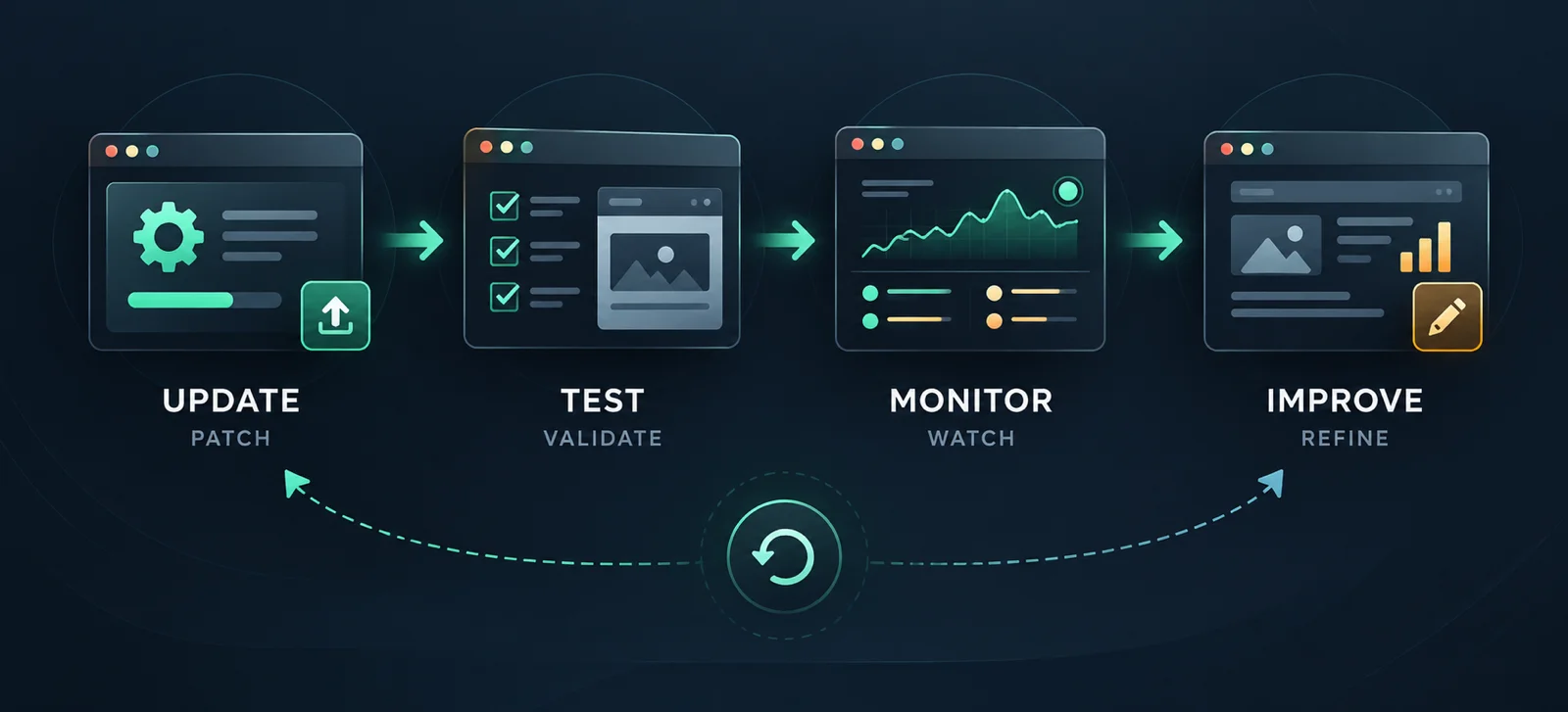
A website maintenance plan is an ongoing service arrangement for keeping a website secure, usable, current, measurable, and aligned with business needs. It may include scheduled technical work, monitoring, backups, content updates, issue response, performance checks, and improvement recommendations.
It is different from ad-hoc support. With ad-hoc support, the business normally contacts a developer after something breaks and waits for the issue to be assessed. A structured plan creates agreed responsibilities, working methods, priorities, and reporting before an incident occurs.
The exact scope should match the website’s technology, traffic, integrations, content workflow, risk profile, and internal team. Element8’s Saudi business guide to website support after launch provides useful context on the wider support responsibilities that begin after a website goes live.
Why maintenance matters after launch
Launching a website is a milestone, not the end of its operating life. Software dependencies change, browsers evolve, content becomes outdated, integrations fail, and user expectations move. Without ownership, small issues can remain invisible until they affect enquiries, trust, or business operations.
Regular maintenance helps a business:
- Reduce avoidable security and compatibility risks.
- Keep forms, integrations, analytics, and notifications working.
- Preserve page speed and mobile usability as content grows.
- Correct broken links, outdated content, and technical SEO problems.
- Make controlled changes without losing track of approvals.
- Identify improvements using evidence instead of guesswork.
Maintenance does not remove all risk. It creates a repeatable way to identify, prioritize, and respond to risk.
What should a professional maintenance plan include?
Security updates and vulnerability management
The provider should identify the website platform, plugins, libraries, integrations, hosting dependencies, and access points that need attention. Updates should be assessed and tested appropriately rather than applied blindly to a live website.
Security work may include patching, access review, malware checks, firewall or hosting coordination, vulnerability triage, and escalation. The exact controls depend on the stack and hosting environment. WordPress sites can use the WordPress hardening guidance as a baseline, but a maintenance agreement should explain how those principles apply to the actual site.
Backups, recovery, and rollback
A backup is useful only when it can be restored. A plan should state what is backed up, how often backups run, where they are stored, how long they are retained, and who can initiate recovery.
The provider should also clarify whether backups cover the database, uploaded media, code, configuration, and relevant third-party settings. A rollback process is especially important before major updates, migrations, integrations, or template changes.
Monitoring and issue detection
Monitoring should reflect the website’s business importance. It may include availability, key forms, certificate expiry, domain or DNS events, server resources, integration errors, performance indicators, and important user journeys.
A plan should distinguish between an automated alert and a confirmed business-impacting incident. The provider should explain who receives alerts, how alerts are triaged, and when the client is contacted.
Content and functional updates
Many businesses need more than technical patching. They may need a new service page, a campaign update, a case-study change, an image replacement, a form adjustment, or an Arabic-English content correction.
The plan should define how these requests are submitted, estimated, approved, tested, and released. It should also distinguish routine content changes from new features or development work that require a separate estimate.
Performance and mobile checks
Performance can decline as media, scripts, plugins, tracking tools, and integrations accumulate. Maintenance reviews should check key templates and user journeys rather than relying on a single homepage score.
Useful checks may include loading behavior, mobile layout, image handling, caching, script changes, interaction stability, and important form or enquiry paths. Google’s Core Web Vitals documentation explains the user-experience signals that should be considered alongside broader technical and business checks.
SEO hygiene and analytics continuity
Maintenance should protect the foundations that allow search engines and teams to understand the website. This can include checking broken links, redirects, indexability, canonical signals, metadata changes, XML sitemaps, structured data, and analytics events when relevant.
The provider should not promise rankings simply because SEO checks are included. The useful commitment is to detect technical issues, preserve measurement, and escalate changes that may affect organic visibility.
What should an SLA define?
An SLA or support schedule should make the service understandable before an issue occurs. It should clarify:
- Support channels and working hours.
- Severity levels and examples of business impact.
- Initial acknowledgement expectations.
- Target response or resolution approach where applicable.
- Escalation contacts and communication method.
- Planned maintenance notifications.
- Approval requirements for content, code, and production changes.
- What is included, excluded, or billed separately.
- Reporting frequency and the information supplied.
These details matter more than a vague promise of “24/7 support”. Element8’s guide to what a website maintenance AMC should include in an SLA covers the relationship between security, speed, SEO, response expectations, and support scope.
How to compare maintenance providers
Price is only one comparison factor. A lower monthly fee may exclude monitoring, testing, content work, recovery assistance, or meaningful reporting. A higher fee is not automatically better either; the scope needs to be clear.
Compare providers across these areas:
Technical capability
Can the team support the actual CMS, framework, hosting environment, integrations, and deployment process? A provider should be able to explain how it will work with the current stack rather than proposing a complete rebuild for every issue.
Business understanding
Does the provider understand which pages, forms, campaigns, languages, and integrations matter most to the business? A support partner should know the difference between a cosmetic issue and a broken lead journey.
Change control
How are updates tested and approved? Who can publish? Is there a staging environment or rollback plan? Clear change control reduces the chance that a quick fix creates a larger problem.
Reporting and transparency
A useful report should show work completed, incidents, outstanding risks, recommended actions, and relevant performance or availability signals. A list of generic tasks is less useful than a clear explanation of website health.
Continuity and ownership
The client should know where credentials, documentation, backups, code, licenses, domains, and analytics access are held. A professional relationship should reduce dependency on one individual and make future handovers possible.
Website maintenance for bilingual and integrated websites
Saudi websites may include Arabic and English content, RTL layouts, multiple editors, CRM connections, marketing tools, and regional campaigns. A change that looks correct in English can break spacing, hierarchy, forms, or navigation in Arabic.
The maintenance plan should therefore include bilingual regression checks where relevant. It should also define how integration failures are identified and who owns the next step when the website, CRM, hosting provider, or external API is involved.
For a larger platform, maintenance may need a more formal operating model. Element8’s enterprise website development service is relevant when the website includes multiple teams, complex workflows, or connected systems that require structured governance.
Questions to ask before signing a plan
Before choosing a provider, ask:
1. What exactly is included every month, and what is excluded?
2. Which systems, integrations, languages, and templates are covered?
3. How are backups tested and how would recovery work?
4. How are urgent incidents prioritized and communicated?
5. How are content requests, approvals, and production changes handled?
6. What monitoring is active and who receives alerts?
7. What reporting will the business receive?
8. Who owns the accounts, documentation, code, and backups?
9. How are third-party costs, licenses, hosting, and out-of-scope work handled?
10. What happens when the agreement ends or the website changes provider?
Element8 insight: maintenance is an operating partnership
The value of a maintenance plan is not measured only by the number of tickets closed. It is measured by whether the website remains dependable, understandable, secure, measurable, and ready to support the business.
For a simple site, that may mean a focused schedule of updates, backups, monitoring, and content support. For a larger Saudi organization, it may include release governance, bilingual QA, integration monitoring, analytics continuity, security coordination, and planned improvement work.
Businesses comparing a support partner can review Element8 Saudi website development services and ask for a scope based on the website’s technology, risk, business priorities, and required response model.
Frequently asked questions
What is included in a website maintenance plan?
A plan may include security updates, backups, monitoring, issue response, content changes, performance reviews, SEO hygiene, analytics checks, and reporting. The exact scope should be written into the agreement.
How much do website maintenance plans cost in Saudi Arabia?
The cost depends on the website platform, integrations, traffic, languages, risk, support hours, content workload, monitoring, and response expectations. A reliable quote requires a defined scope rather than a generic monthly price.
Is a website maintenance plan the same as an SLA?
No. A maintenance plan describes ongoing services and responsibilities. An SLA or support schedule defines service expectations such as support channels, severity levels, acknowledgement, escalation, and reporting.
Does WordPress need a professional maintenance plan?
Many WordPress sites benefit from managed updates, backups, security checks, performance reviews, and controlled content support. The appropriate level depends on the site’s business importance, integrations, traffic, and internal capability.
Can a maintenance partner handle Arabic and English websites?
Yes, if bilingual publishing, RTL layouts, forms, templates, and QA are included in the agreed scope. Arabic support should be tested as part of the workflow rather than treated as an occasional translation request.
What is the difference between maintenance and a redesign?
Maintenance keeps an existing website operating and improves it within an agreed scope. A redesign or rebuild changes the information architecture, visual system, technology, or major user journeys and normally needs a separate discovery and delivery plan.