


Website Maintenance AMC: What to Include in an SLA (Security, Speed, SEO)
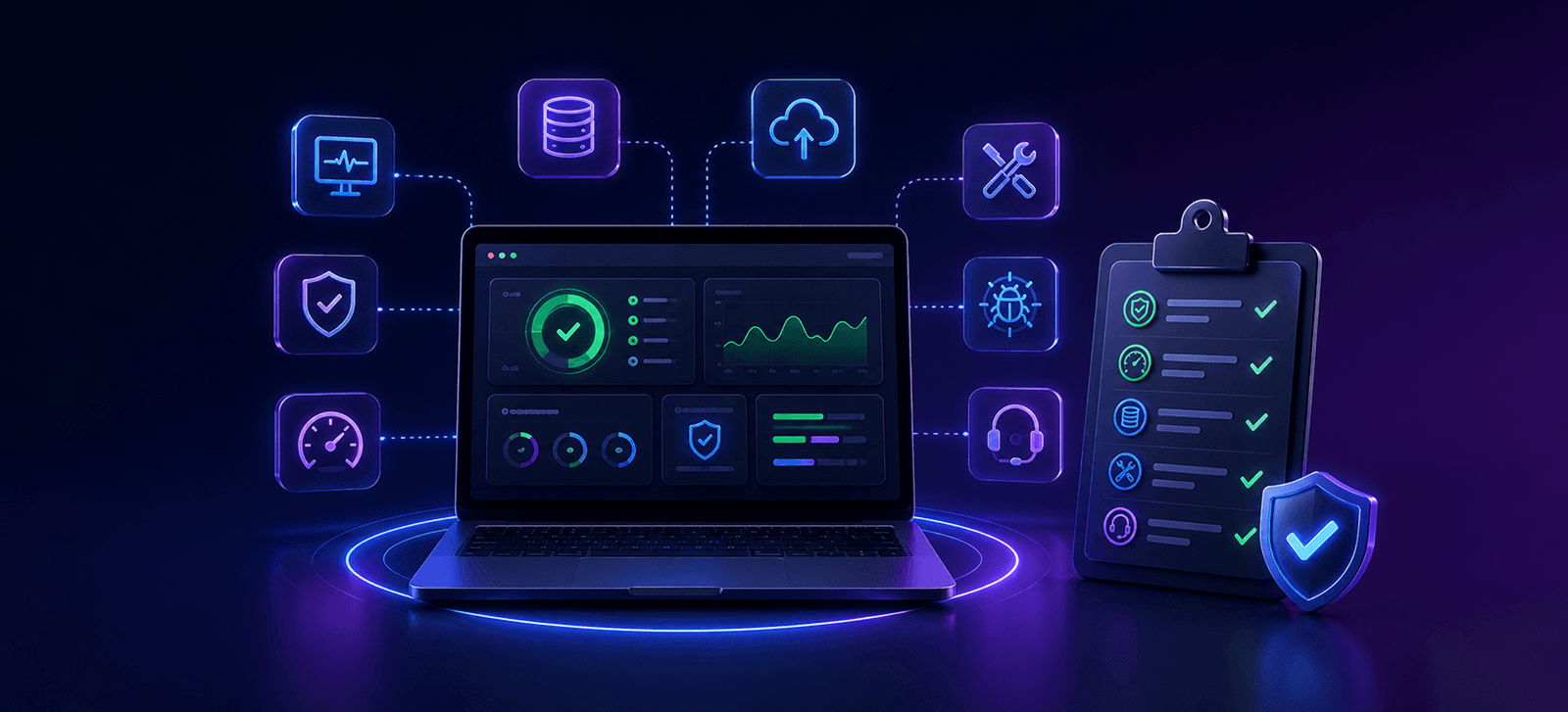
Businesses are now viewing website management as a simple monthly line item, a generalized retainer fee paid to make sure someone is keeping an eye on things. However, relying on a vague, loosely defined contract agreement is a significant operational risk. Without explicit performance guarantees and a clearly defined website maintenance SLA, your digital storefront becomes vulnerable to hidden downtime costs, severe SEO decay, and major security exposure.
When a website goes down or slows to crawl, the financial impact can accumulate by the minute through missed leads, lost e-commerce sales, and damaged brand reputation. Even worse, search engines continuously crawl your site; if they encounter unmanaged runtime errors, slow page loads, or outdated infrastructure, your organic search rankings can drop drastically within days.
To protect your digital infrastructure, businesses often partner with a professional website development company in Saudi Arabia to establish measurable SLAs and proactive maintenance systems.
AMC vs. SLA: What is the Difference?
While often used interchangeably in common usage, an Annual Maintenance Contract (AMC) and a Service Level Agreement (SLA) serve two very different purposes within a website support ecosystem.
An AMC is a commercial agreement that establishes the legal, operational, and financial framework for a service partnership over a fixed period (typically 1 year). It outlines the broad scope of work, such as routine maintenance, software licensing, or labor allocation, and determines the overall cost and payment terms.
On the other hand, SLA for website maintenance is the measurable service commitment embedded directly within or attached to the contract. It dictates the precise quality, operational speed, and technical standards that the provider delivers, measured against key performance indicators (KPIs).

Security Scope Every Website Security SLA Must Cover
Patching Cadence & Core Updates
Outdated software is one of the most common entry points for malicious actors. Your agreement must outline strict timelines for deploying updates:
- Critical / Zero-Day Exploits: The SLA must mandate that critical security patches (such as CMS core vulnerabilities, plugin exploits, or server-level patches) are deployed or mitigated within 24 to 72 hours of public disclosure or vendor release.
- Routine Updates: Medium- to low-priority patches, theme updates, and non-critical plugin updates should follow a predictable schedule, typically handled within a 14- to 30-day window to allow for staging-environment testing.
Vulnerability Management & Firewalls
Passive scanning is rarely enough to protect modern web applications, and the contract should guarantee:
- Active Web Application Firewall (WAF): A WAF must be deployed and configured in active blocking mode, not merely monitoring mode, to deflect SQL injections, cross-site scripting (XSS), and automated bot attacks at the network edge.
- Continuous Scanning: Automated malware and vulnerability scans must run at least weekly on production environments, with immediate, automated alerts triggered by unauthorized file modifications or structural changes.
Backup Frequency & Disaster Recovery Time Objectives (RTO)
If a catastrophic system failure or ransomware attack occurs, your backup architecture dictates your survival. Ensure your agreement defines:
- Backup Cadence: Critical transactional or dynamic data requires incremental backups executed every 1 to 4 hours, complemented by full, off-site system backups generated daily. Static content websites can default to daily incremental and weekly full backups.
- Data Isolation: All backups must be stored in secure, off-site, cloud-isolated environments completely separated from the primary hosting infrastructure.
- Restore Testing & RTO: Backup integrity must be verified through mandatory disaster recovery drills conducted at least quarterly. The agreement should explicitly lock in a Recovery Time Objective (RTO), the maximum acceptable duration your site can remain offline during a restoration process, typically set to under 4 hours for high-priority outages.
Speed and Uptime Commitments to Demand
A beautiful website is ineffective if it fails to load or crashes regularly during peak traffic periods. Your website performance SLA must convert abstract concepts like “fast hosting” into strict, contractually binding performance metrics.
Uptime Targets & Monitoring Intervals
You should not accept vague promises on high availability. Demand a definitive uptime SLA website baseline:
An availability metric of 99.9% allows for roughly 43 minutes of unscheduled downtime per month, whereas 99.99% limits downtime to less than 5 minutes monthly. Crucially, specify that uptime must be verified by automated external monitoring tools that ping the server at intervals of 1 to 5 minutes, rather than relying on self-reported vendor logs.
Page-Speed Performance & Core Web Vitals Governance
Modern performance optimization is anchored to Google’s user experience metrics. Your maintenance agreement should bind the vendor to a regular optimization cycle tracked via automated tools like Google PageSpeed Insights:
- Largest Contentful Paint (LCP): Measures perceived loading speed. The vendor should actively optimize assets to keep LCP under 2.5 seconds.
- Cumulative Layout Shift (CLS): Measures visual stability. The SLA should mandate structural fixes (such as explicit image dimensions) to maintain a CLS score below 0.1.
- Interaction to Next Paint (INP): Measures user interface responsiveness. Optimization tasks should target an INP of less than 200 milliseconds.
Database Optimization Schedules
To maintain and sustain these performance thresholds, the SLA should include a recurring maintenance schedule for database hygiene. This should include monthly automated scripts to purge old page revisions, clear expired transient options, clean up spam comments, and re-index the database tables to prevent query latency from degrading server response times.
SEO Maintenance Deliverables That Protect Growth
Technical Health and Indexing Safeguards
- Crawl & Index Monitoring: Ongoing validation of your robots.txt configuration and XML sitemaps to ensure search engine spiders can efficiently discover your pages without wasting crawl budget.
- Google Search Console Audits: Monthly analysis of coverage reports within Google Search Console to catch, diagnose, and remediate structural crawl errors, server timeouts, or indexing rejections.
- Canonical & Hreflang Hygiene: Continuous automated checks to prevent duplicate content penalties by enforcing proper canonical tags and maintaining accurate hreflang attributes for multi-lingual configurations.
Structural and On-Site Cleanup
- Broken Link & Redirect Management: Monthly scans to isolate broken external links and internal 404 errors. The SLA should mandate immediate remediation via a clean 301 redirect mapping to preserve link equity.
- Schema Markup Verification: Ongoing monitoring of structured data and schema deployments to ensure rich snippets do not break due to CMS updates or core architectural modifications.
- Mobile Responsiveness Audits: Regular testing across evolving mobile viewports to prevent layout breakages that could trigger mobile usability penalties from search engines.
Severity-Based Response & Resolution Matrix
A critical vulnerability on a checkout page requires immediate attention, whereas fixing a minor typographical layout error on a blog post can wait. A functional website supports SLA, clearly classifies incidents by impact, and maps them to contractually guaranteed response and resolution timelines.

The agreement must outline a transparent escalation path. If a P1 critical incident is not addressed within its designated 1-hour window, the ticket must automatically escalate to senior engineering leads, and executive management must be notified if the resolution window is missed.
What to Measure Monthly: The KPI Dashboard
Transparency is the main foundation of any successful maintenance contract. Your partner should provide a monthly analytics dashboard that quantifies contact compliance. To ensure your monthly operational reports cover these key areas:
- Security Health: Total security scans completed, volume of blocked intrusion attempts, total patches applied, and zero-day patch delivery timelines.
- Availability Metrics: Total verified uptime percentage against the agreed baseline, alongside a log of any micro-downtime incidents and their root causes.
- Performance Evolution: Comparative monthly trends of mobile and desktop Core Web Vitals scores, tracking server response times over time.
- SEO & Technical Audits: Summary of resolved 404 errors, crawl errors addressed, and confirmation of successful XML sitemap submissions.
Website Maintenance Contract Checklist
When reviewing your final contract documentation, use this definitive website maintenance contract checklist to ensure no mandatory safeguards are missing:

Secure Your Digital Future Today
An unmaintained website is a liability to your revenue, security, and search engine visibility. Leaving your digital assets’ health to an undefined, reactive monthly retainer exposes your business to unexpected downtime and compounding technical debt.
Protect your digital investments with an intentional, proactive maintenance strategy. Whether you need proactive monitoring, enterprise-grade security, or scalable infrastructure support, partnering with an experienced website development company in Saudi Arabia can help future-proof your digital ecosystem. Contact our expert engineering team today to schedule a comprehensive website maintenance, AMC audit, and SLA gap assessment. Let’s build a secure, resilient, and highly performant foundation for your business.