


Headless CMS vs Traditional CMS: What’s Better for Modern Websites?
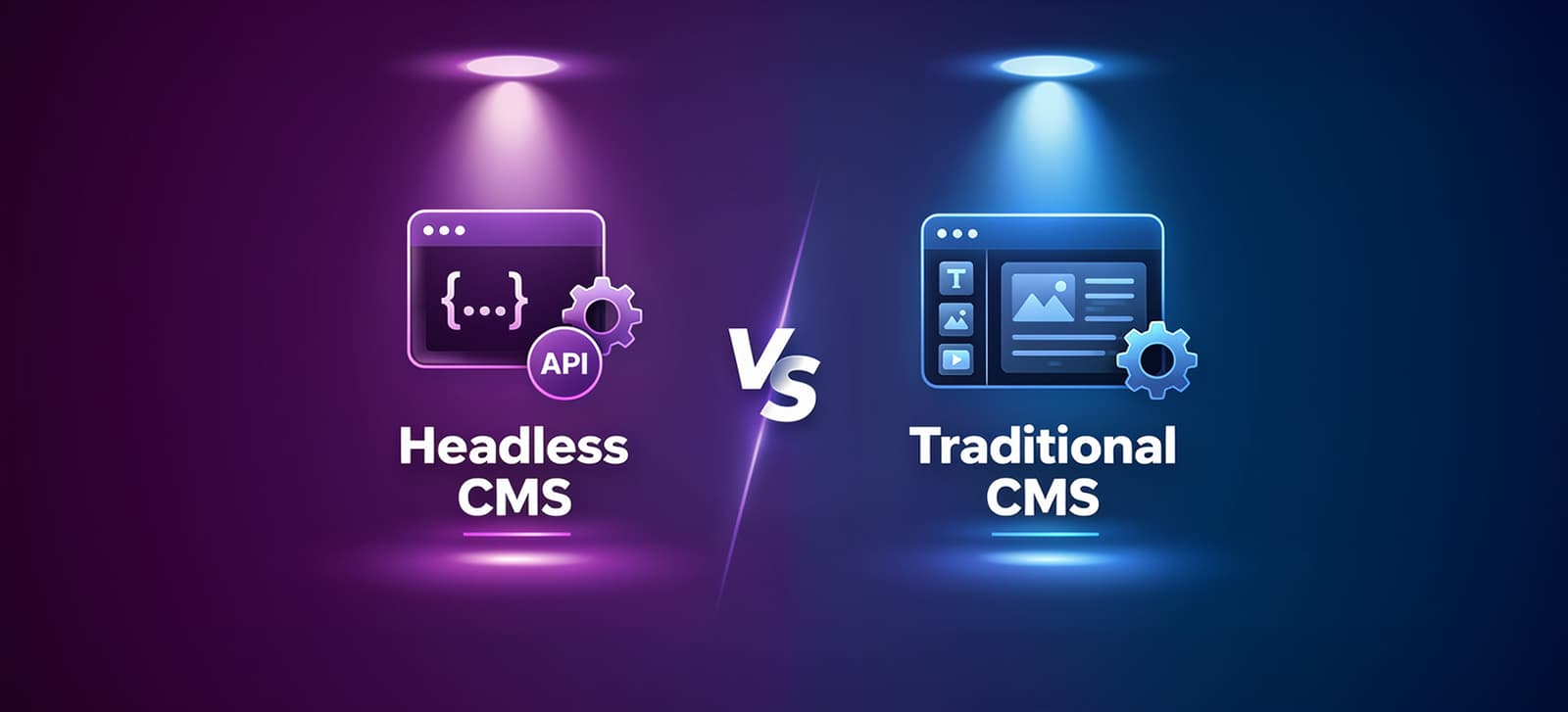
In the fast-paced digital landscape of 2026, the architecture of your website is not just a technical detail; it is the core business strategy. As brands strive to reach customers on smartwatches, mobile apps, and high-speed web browsers, the “one-size-fits-all” approach of the past is being challenged.
The debate between headless CMS vs traditional CMS has moved from developer forums to boardroom discussions. While traditional systems like WordPress have powered the web for decades, the rise of the headless content management system has introduced a new standard for flexibility, speed, and omnichannel delivery.
But which one is truly “better”? The answer depends on your specific goals, technical resources, and your plans for scaling.
What is a Traditional CMS?
A traditional CMS, often referred to as a “coupled” or “monolithic” system, is an all-in-one platform in which the backend (where you create and store content) and the frontend (what users see) are tightly linked.
How it Works
In a traditional setup, the CMS controls everything from the database and user interface to the templates that determine how content is displayed. Popular examples include WordPress, Drupal, and Joomla. When a user visits your site, the CMS pulls content from the database and pushes it through a predefined theme to render the page.
Best For:
- Simple Websites: Ideal for blogs, personal portfolios, and small business sites.
- Non-Technical Teams: Marketers can use “What You See Is What You Get” (WYSIWYG) editors to manage layouts without coding.
- Rapid Deployment: You can go from zero to a live site in hours using pre-built themes.
What is a Headless CMS?
To understand the modern approach, it’s important to first answer the question: What is a headless CMS?
Unlike its traditional counterpart, a headless CMS is a “backend-only” system. It can act as a centralized repository where content is stored as raw data, completely separate from the presentation layer (the “head”).
API-Driven Approach
Because the “head” (the frontend) is removed, content is delivered to any device via APIs (RESTful or GraphQL). This means the same piece of content can be sent to a website, a mobile app, a digital kiosk, or even an IoT device.
A popular example of a headless content management system is Strapi, an open-source platform that gives developers full freedom to build the frontend with modern frameworks such as React, Vue, or Next.js.
Definition: A headless content management system is a decoupled architecture in which content is managed on the backend and delivered via APIs to any frontend display, offering unparalleled flexibility for multi-platform delivery.

Why Use Headless CMS for Modern Websites?
As digital transformation accelerates, businesses are increasingly asking why to use a headless CMS instead of sticking to familiar tools. This shift is driven by several key performance and strategic advantages:
-
Omnichannel Flexibility
In 2026, your audience is not just on a laptop. They are on mobile apps, voice assistants, and smart devices. A headless CMS allows you to “Create Once, Publish Everywhere” (COPE), ensuring brand consistency across all touchpoints without duplicating work.
-
Superior Performance and Speed
By decoupling the frontend, developers can utilize Static Site Generation (SSG) and Server-Side Rendering (SSR). This results in lightweight websites that load almost instantly, directly benefiting your SEO rankings and user retention.
-
Future-Proofing Your Technology
Traditional CMS themes eventually become outdated. With a headless approach, you can redesign your entire frontend or switch to a new technology (like moving from React to a future framework) without ever touching your backend content.
-
Enhanced Security
Traditional systems are often targets for hackers because the backend and frontend are connected. In a headless environment, the content repository is hidden behind an API, significantly reducing the attack surface.
-
Superior SEO Control
Performance and speed play a crucial role in SEO, and a headless content management system supports this with a clean, bloat-free architecture. Removing heavy frontend dependencies, it enables faster crawling, quicker load times, improved Core Web Vitals, and ultimately better search rankings.
These advantages clearly explain why using a headless CMS is becoming a common strategy for modern businesses.
Headless CMS for Modern Businesses in Saudi Arabia
The Saudi market is currently undergoing a massive digital shift aligned with Vision 2030. For enterprises in the Kingdom, choosing the right CMS is a matter of competitive survival.
Saudi Market Relevance & Vision 2030
As Saudi Arabia aims to become the global hub for technology, local businesses are moving away from restrictive legacy systems. A headless WordPress development company in Saudi Arabia can help bridge the gap, allowing brands to keep familiar WordPress backend while using a “headless” frontend for faster, more secure performance tailored to the Kingdom’s 5G-enabled mobile users.
E-commerce Growth
With Saudi e-commerce revenue projected to grow significantly by 2026, the need for high-performance, content-rich shopping experiences is at an all-time high. Headless commerce allows brands to pair a powerful CMS like Strapi with dedicated checkout engines to create seamless, localized shopping journeys.
When to Choose Traditional CMS
Despite the power of headless systems, a traditional CMS is still the right choice in specific scenarios:
- Low Budget & Small Teams: If you do not have a dedicated development team, a traditional CMS like WordPress offers an all-in-one solution. It will allow non-technical users to easily manage content, design, and updates without relying heavily on developers, making it cost-effective and efficient.
- Simple Informational Websites: For basic websites such as company profiles or personal blogs, a headless setup is often unnecessary. A traditional CMS provides everything you need, ready-made themes, plugins, and easy content management, all without added complexity.
- Faster Time to Launch: If speed is a priority, traditional CMS platforms enable quick deployment using pre-built templates and plugins. You can get a website live within days, or even hours, compared to the longer setup time required for headless solutions.
- Ease of Content Management: Traditional CMS platforms are designed for editors and marketers. With user-friendly dashboards and visual editors, updating content, images, and pages is simple and requires no technical expertise.
- Lower Maintenance Requirements: Since everything is managed within a single system, there is less need for handling multiple technologies or APIs. This reduces ongoing maintenance complexity and technical overhead.
- Wide Plugin Ecosystem: Platforms like WordPress offer thousands of plugins for SEO, security, analytics, and more. This allows you to add functionality quickly without building features from scratch.
Why Choose Headless CMS Development?
Why Choose Headless CMS Development?
Choosing professional headless CMS development is an investment in building a future-ready digital infrastructure. It enables businesses to move beyond template-based limitations and adopt a flexible, high-performance ecosystem designed for growth, scalability, and innovation.
By working with experts to implement platforms like Strapi, you gain:
- Custom Content Modeling: Headless CMS allows you to structure content exactly the way your business needs it. Unlike traditional systems, you’re not restricted by predefined templates, giving you full control over how content is created, stored, and delivered.
- Easy Integration with Modern Tech Stacks: A headless approach easily connects with CRMs, ERPs, payment gateways, and third-party tools via APIs. This creates a unified digital ecosystem where all systems work together efficiently.
- Scalability for Growth: Headless CMS platforms are built to handle high traffic and rapid expansion. Whether you’re scaling during major shopping seasons in Saudi Arabia or running global campaigns, your platform remains stable and high-performing.
- Omnichannel Content Delivery: Content can be delivered across multiple platforms, such as websites, mobile apps, kiosks, IoT devices, and more, from a single backend. This ensures consistent brand messaging across all digital touchpoints.
- Enhanced Performance & Speed: By decoupling the frontend and backend, headless CMS enables faster load times and better performance, especially when combined with modern frameworks like React or Next.js.
- Improved Security: With separated layers and API-based access, headless architecture reduces common vulnerabilities associated with traditional CMS platforms, offering a more secure digital environment.
- Future-Proof Architecture: As technology evolves, headless CMS allows you to upgrade or change your frontend without affecting your backend, ensuring long-term flexibility and adaptability.
What’s Better for Your Website?
Choosing the right headless content management system can define how your business scales digitally.
- Choose a Traditional CMS if you want simplicity, have a limited budget, and need a website that functions as a standalone digital brochure.
- Choose a Headless CMS if you are building a complex digital product, require high-speed performance, or need to deliver content across multiple platforms, such as apps and IoT.
In the modern web, the brands that win are those that are fast, flexible, and ready for whatever device comes next.
Looking to build a modern website using a headless CMS? Talk to our experts at Element 8 today to discover the best architecture for your digital transformation.
Our team specializes in scalable, future-ready solutions using platforms like Strapi.