


The Ultimate Guide to Choosing a Branding Agency in Jeddah
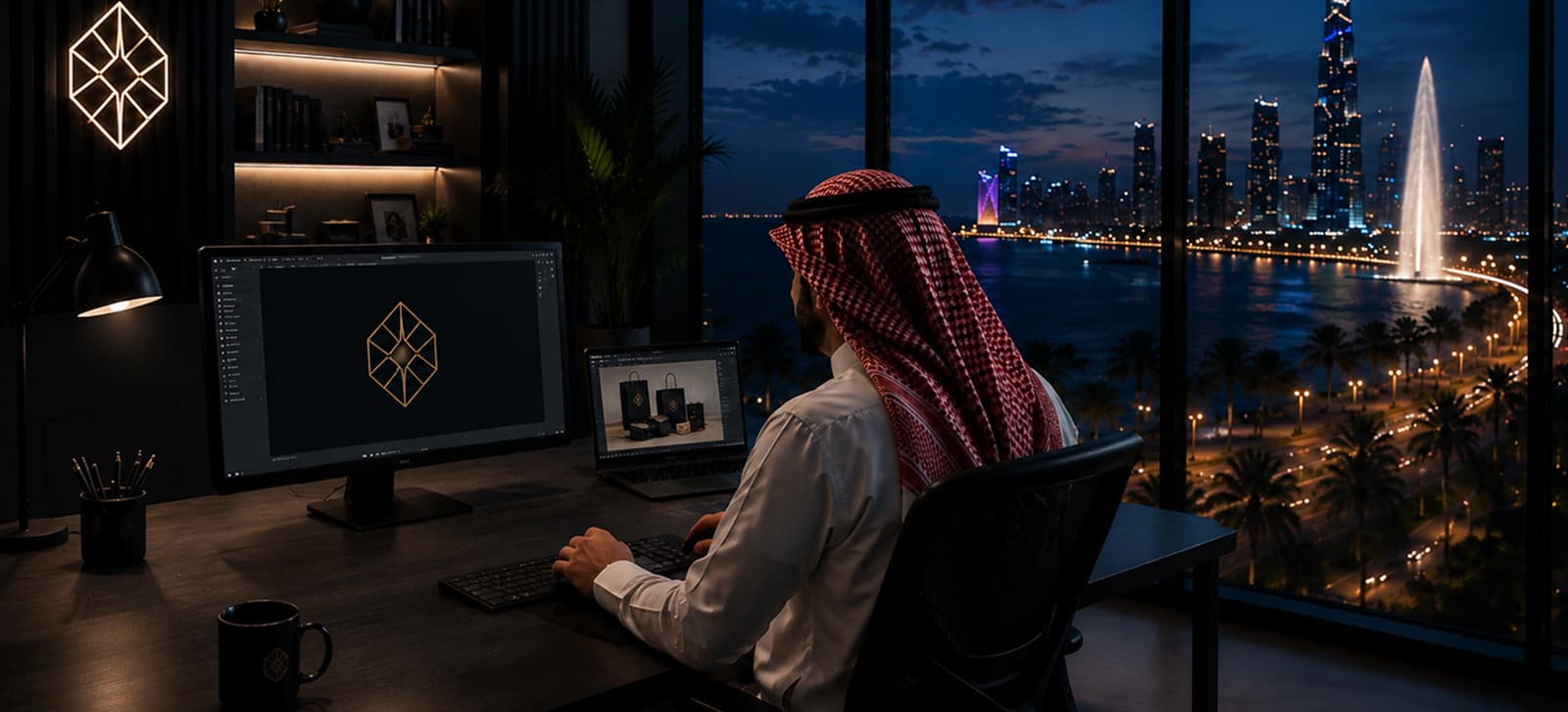
Jeddah is one of the most competitive commercial markets in Saudi Arabia. It is home to established family conglomerates and a fast-growing hospitality and tourism sector tied to the Red Sea coastline, an active real estate development pipeline, and a new generation of retail and technology brands that are trying to earn attention in a crowded market. In this environment, a brand identity is not decoration; it is the mechanism by which business is recognized, trusted, and remembered.
Choosing the right partner is important because branding decisions are expensive to reverse. A logo can be redrawn in a week. A brand strategy built on the wrong positioning, the wrong audience insight, or a rushed Arabic-English identity can take years and a second investment to correct. This is why more Saudi businesses are now treating the agency selection process itself as a strategic decision, rather than a quick vendor search.
Understanding how to choose a branding agency in Jeddah starts with recognizing what the Saudi market actually demands: cultural fluency, genuine bilingual capability, and a process that goes beyond visual design into commercial strategy. If you’re comparing providers across the Kingdom, it’s also worth understanding what distinguishes a professional branding agency in Saudi Arabia before narrowing your shortlist.
Before shortlisting agencies directly, many businesses use comparison platforms such as Sortlist or Entasher to see verified agency profiles, service scopes, and client feedback side by side. These platforms are useful for building an initial shortlist, but they are a starting point, not a decision-making tool. The real evaluation happens in the questions you ask once you’re talking to an agency directly, which is what this guide covers in detail.
This blog is written as a practical buying guide: how to define your requirements, what separates strategic branding from decorative design, how to evaluate the Saudi market and bilingual expertise, what a professional process looks like, and what red flags should end a conversation early.
Define Your Branding Requirements Before Contacting Agencies
Most branding engagements fail or run over budget because the client and the agency were solving different problems. Before you contact any agency, get internal clarity on what you actually need. This single step will save weeks of miscommunication.
Branding requirements typically fall into one or more of these categories:
- New brand development: for startups or new product lines with no existing identity
- Rebranding: repositioning or refreshing an existing brand due to market changes, mergers, or outdated identity
- Brand positioning: clarifying what the brand stands for and how it differs from competitors, independent of visual design
- Naming: developing a business, product, or sub-brand name (often bilingual)
- Logo and visual identity: the mark, color system, typography, and usage rules
- Brand guidelines: the reference document that governs consistent application
- Packaging design: for retail, F&B, healthcare, or manufacturing products
- Website and digital identity: how the brand translates to UX, UI, and digital experience
- Campaign or launch support: the go-to-market plan for introducing the brand
- Arabic-English requirements: whether you need a fully bilingual identity, a primary-language identity with translation, or region-specific variants
Evaluate Saudi Market Expertise
Branding frameworks that work in London or Dubai do not automatically translate to Jeddah. Saudi consumer behavior, family and community influence on purchasing decisions, religious and cultural sensitivities, and the pace of change driven by Vision 2030 all shape how a brand should be built and communicated.
A genuinely capable agency should be able to speak fluently about:
- Saudi consumer behavior: including the role of trust, word-of-mouth, and family networks in purchase decisions across sectors like healthcare, real estate, and retail
- Jeddah’s business culture: a market shaped by long-established trading families alongside a wave of new hospitality, tourism, and giga-project-adjacent businesses
- Regional buying behavior: how expectations differ between Jeddah, Riyadh, and the Eastern Province
- Competitor landscape: not just who else exists, but how Saudi audiences currently perceive them
- Cultural relevance: imagery, color associations, tone, and messaging that read as authentic rather than imported
- Vision 2030 awareness: the shift toward sustainability, tourism, entertainment, entrepreneurship, and private-sector growth is reshaping what “modern Saudi” branding looks like, and agencies working in the market should understand how these national priorities affect brand expectations across sectors
Ask directly: “Which industries have you worked in across Saudi Arabia, and what did you learn about this market that surprised you?” Agencies with genuine regional experience will have a specific, considered answer. Agencies without it will speak in generalities.
Assess Arabic-English Branding Capabilities
This is one of the most commonly underestimated parts of the branding process — and one of the most damaging to get wrong. In a market like Jeddah, a bilingual identity is not optional for most sectors, and Arabic cannot be treated as a translation step that happens after the “real” design work is finished.
A capable bilingual branding agency in Saudi Arabia should be able to demonstrate genuine capability across:
- Arabic copywriting: written natively in Arabic by a copywriter, not translated word-for-word from an English draft
- Typography: Arabic typefaces have different proportions, stroke weights, and legibility rules than Latin script; a logo or headline system needs typographic pairing, not a translated label bolted onto an English design
- Right-to-left (RTL) design: layout, navigation, and visual hierarchy must work in RTL as a primary design consideration, not a mirrored afterthought
- Bilingual logos: some brands need a true bilingual lockup where both language versions carry equal visual weight and legibility; this requires custom typographic work, not a font substitution
- Naming: names should be checked for meaning, pronunciation, and connotation in both Arabic and English before being finalized
- Tone of voice: formal, warm, authoritative, or conversational tone needs to be developed separately for each language, since directly translated tone often reads as stiff or unnatural
- Localization vs. translation: localization adapts meaning and cultural resonance; translation only converts words. A brand identity needs the former.
The clearest test: ask to see Arabic-first work, not just English work with an Arabic version attached. If the Arabic identity looks like an afterthought a stretched font, awkward spacing, or literal translation, treat that as a serious limitation, regardless of how strong the English work looks.
Review Relevant Case Studies
A useful case study is a decision-making tool, not a highlight reel. When an agency presents past work, it should be structured to answer a business question, covering:
- The challenge: what was happening in the business or market before the project started
- The research: how the agency built its understanding of the audience and competitive landscape
- The strategy: the positioning and rationale that guided every subsequent decision
- The implementation: how the strategy translated into identity, messaging, and rollout
- The measurable outcome: what changed as a result, even if the metric is qualitative (market perception, internal clarity, launch readiness) rather than a hard number
If an agency shows you only “before and after” logo images with no narrative connecting them, ask for the missing context directly. A results-oriented agency should welcome that conversation rather than deflect it.
Meet the Team Behind the Work
Branding proposals are often presented by senior account managers or business development staff, but the people who will actually shape your brand are the strategists, writers, and designers doing the work. Before signing, ask to understand the real team structure:
- Who leads the strategy? Is there a dedicated strategist, or is strategy folded into the design process informally?
- Who develops the Arabic messaging? Is this a native Arabic copywriter, or a translator working from an English draft?
- Who designs the identity? Will you be working with senior designers, or will work be delegated to juniors after the pitch is won?
- Will any part of the work be outsourced? Some agencies subcontract Arabic copywriting, illustration, or motion work to freelancers, which isn’t inherently a problem, but you should know about it upfront.
- Who approves final deliverables? Understanding the internal quality-control process tells you how consistent the final output is likely to be.
Agencies confident in their team structure will answer these questions directly and specifically. Vague answers about “our team” without names or roles are worth probing further.
Understand the Branding Process
A professional branding engagement should follow a structured, recognizable workflow. While the exact terminology varies between agencies, the underlying stages are consistent across established branding methodologies:
- Discovery: understanding the business, its history, and its goals
- Stakeholder workshops: aligning leadership and key teams on ambition and constraints
- Market research: understanding the audience and how they currently perceive the category
- Competitor analysis: mapping how competitors position themselves visually and verbally
- Brand strategy: defining the core proposition, personality, and narrative
- Positioning: articulating where the brand sits relative to competitors and audience needs
- Creative direction: establishing the visual and verbal direction before full design begins
- Identity development: building out the logo, color, typography, and messaging system
- Testing: validating the identity with real stakeholders or audience samples before finalizing
- Brand guidelines: documenting how the identity should be applied consistently
- Rollout: implementing the brand across physical and digital touchpoints
- Ongoing support: maintaining consistency as the brand expands into new channels and markets
If an agency’s proposed process skips directly from a briefing call to logo concepts, that is a meaningful gap. Strategy should always precede design.

Ask for this list in writing as part of the proposal. Agencies that resist itemizing deliverables or that bundle everything into vague language like “full branding package” make it harder to know what you’re actually paying for.
Compare Agencies by Value: Not Price
Pricing for branding projects varies significantly, and that variation is usually explained by genuine differences in scope rather than arbitrary markup. When comparing quotes, look at what drives the difference:
- Depth of research: stakeholder interviews and audience research take real time and add cost, but also add reliability
- Strategic complexity: a straightforward logo refresh costs less than a full repositioning and rebrand
- Number of languages: genuine bilingual work, done properly, requires separate creative development for each language
- Number of concepts presented: more initial directions mean more design hours
- Scope of deliverables: a project that includes packaging, digital templates, and signage will naturally cost more than one limited to a logo and guidelines
- Implementation support: agencies that carry the brand through to website and digital rollout are pricing in a broader scope of work than those who hand off a PDF and step away
Rather than asking “why is this quote higher,” ask “what does this quote include that the other doesn’t.” That question usually reveals the real difference in value, and prevents you from comparing two fundamentally different projects as if they were the same.
Understand Ownership Rights
Ownership terms are frequently overlooked until a dispute arises — usually when a business wants to make a small edit to its own logo and discovers it doesn’t have the rights or files to do so. Clarify these points in writing before the project begins:
- Logo ownership: confirm that full intellectual property rights transfer to your business upon final payment, not just a license to use the design
- Editable source files: you should receive native, editable files (such as vector source files), not only exported images
- Font licenses: custom or premium typefaces often require a separate commercial license; confirm who holds it and whether it transfers with the project
- Image licenses: if stock or custom photography was used, confirm usage rights and any restrictions
- Unused concepts: clarify whether rejected concepts remain the agency’s property or are included in the handover
- Portfolio rights: most agencies will want to display completed work in their own portfolio; agree on this explicitly rather than assuming
None of this needs to be adversarial. A transparent agency will already have clear answers to these questions, because they’ve addressed them with every previous client.
Consider Long-Term Implementation Support
A finished brand guideline document is not the end of the branding process; it is the starting point for everything the brand will do next. A logo and color palette mean little until they are implemented consistently across every touchpoint a customer actually experiences:
- Websites: the digital brand experience is often a customer’s first real interaction with the identity. If your branding project includes a new website or a complete redesign, choosing an agency with expertise in web design in Jeddah helps ensure your visual identity, messaging, and user experience remain consistent from launch onward.
- Mobile apps: for technology and retail brands, app design needs to reflect the same brand system
- Packaging: retail, healthcare, and manufacturing brands need packaging that translates the identity into a physical product experience
- Campaigns: launch and ongoing marketing campaigns need to apply the brand consistently across channels
- Social media: day-to-day content needs templates and guidelines that keep the brand recognizable at speed
- Signage: for hospitality, real estate, and retail businesses, physical signage is a major brand touchpoint
- Internal communications: employees need to understand and represent the brand internally before it reaches customers
This is where many businesses discover a gap: the agency that designed the identity does not have the digital or implementation capability to carry it further. Because Element8 operates across branding, web design, and digital transformation, brand and digital implementation can be planned as a single continuous process rather than handed between disconnected vendors, which matters most in the months immediately after a launch, when consistency is hardest to maintain.
Red Flags to Watch For
Some warning signs are consistent across the branding industry, regardless of an agency’s size, reputation, or pricing. If you encounter any of these, it’s worth slowing down before signing a contract. Be cautious of agencies that promise to deliver a complete brand identity in just a few days, as meaningful branding requires research, strategy, and iteration. If every conversation revolves solely around designing a logo, with little discussion about brand positioning, messaging, target audience, or business goals, the agency may be approaching branding as a purely visual exercise rather than a strategic one.
A lack of a clearly defined research process is another major concern. If an agency cannot explain how it studies your market, competitors, or audience before making recommendations, it’s likely skipping a critical phase of the project. For businesses targeting Saudi Arabia, limited Arabic capabilities should also raise questions. Simply translating a logo or marketing materials is not enough; effective branding requires native Arabic copywriting, culturally relevant messaging, and thoughtful typographic design. You should also pay close attention to ownership terms, ensuring there is no ambiguity about who owns the final brand assets and source files once the project is complete.
Finally, be wary of hidden costs, unexplained scope changes, or agencies that outsource significant portions of the work without being transparent about it. While subcontracting is common in the industry, reputable agencies disclose who is involved and maintain accountability for the final deliverables. An agency that cannot clearly explain its branding methodology from discovery and research through strategy, design, testing, and implementation is unlikely to deliver a structured, consistent, or strategically grounded branding process.
Questions to Ask Before Hiring
Use this checklist in every agency conversation. A confident, experienced agency will answer all of these clearly and specifically:
- What research do you conduct before starting design work?
- Who on your team leads brand strategy, and what is their background?
- Is Arabic messaging developed natively, or translated from English?
- Can you show an example of Arabic-first design work, not just an English project with Arabic added?
- What is your process from discovery through to brand guidelines?
- What exactly is included in the final deliverables?
- Will we own full rights to the final logo and files, including editable formats?
- Are any parts of this project outsourced or subcontracted?
- How do you measure whether a branding project has succeeded?
- Can you support implementation across our website and digital channels after the brand is finalized?
- How do you handle revisions if initial concepts don’t align with our expectations?
- What is your typical timeline for a project of this scope?
Why Element8 Is the Right Branding Partner for Jeddah Businesses
Choosing the right partner is ultimately a question of evaluating substance over surface. The agencies worth shortlisting are the ones that can explain their strategy, walk you through a structured process, demonstrate genuine bilingual capability, show ownership terms in writing, and support your brand well beyond the guidelines document.
When you’re ready to move past comparison and into a real conversation, evaluate the agency on:
- Strategic thinking, not just visual output
- A documented, repeatable process
- Genuine Saudi market and Jeddah-specific expertise
- Native Arabic-English capability, not translation
- Clear, itemized deliverables and ownership terms
- The ability to support implementation long after launch
Element8 works across branding and digital transformation for businesses throughout Saudi Arabia, which means brand strategy, bilingual identity development, and digital implementation can be approached as one connected process rather than separate vendor relationships. For businesses in Jeddah evaluating their options, the most useful next step is usually a direct conversation about your specific requirements, not another portfolio review.
If you’re currently evaluating how to choose a branding agency in Jeddah, the most useful next step is usually a direct conversation rather than another portfolio review. Element8 is happy to talk through your branding goals, current challenges, and what a well-structured process would look like for your specific business with no pressure to commit before that conversation happens. Get in touch with Element8 to discuss your project.