


Cloud-Native Application Development: Build Scalable Digital Solutions for Business
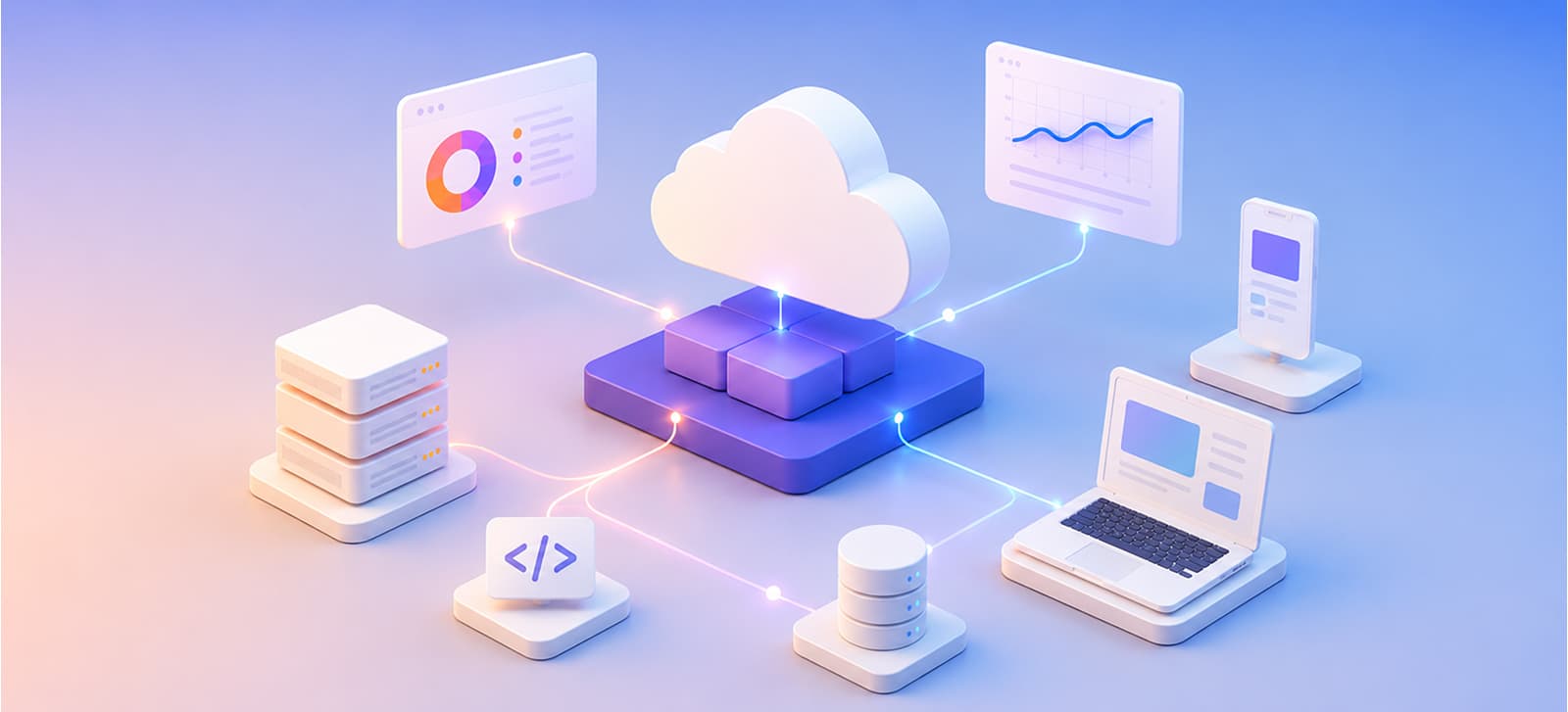
Businesses today are expected to launch digital products faster, handle unpredictable user demand, and deliver seamless experiences across every touchpoint. Traditional software architectures often struggle to meet these expectations, making scalability and agility critical priorities. This is where cloud-native application development has become a game-changing approach.
To survive and thrive in this hyper-competitive era, organizations should pivot away from rigid legacy setups. This is where Cloud-Native Application Development comes into the scene.
By fully using cloud computing models, modern businesses utilize microservices, containerization, and continuous integration/continuous deployment (CI/CD) pipelines to achieve unmatched agility, auto-scaling capabilities, and rapid go-to-market speeds. Building a strong, highly scalable digital platform will require adhering to several core architectural pillars, modern engineering practices, and strict localized deployment frameworks. Through this blog, we will be exploring how shifting to a cloud-native approach empowers organizations to construct the future of digital enterprise software.
What Is Cloud-Native Application Development?
Cloud-Native Application Development is a modern approach to building, deploying, and managing applications for cloud computing environments. Rather than relying on traditional monolithic architecture, where an entire application is bound together as a single indivisible block, it uses distributed systems to deliver highly scalable, resilient, and flexible applications that adapt easily to users’ changing demands.
The 4 Pillars of Cloud-Native Development
To achieve true operational fluidity, the cloud-native methodology heavily leans on four core technologies and cultural practices:
- Microservices: The application is broken down into small, independent services. Each service performs a specific business task and communicates with others via lightweight APIs.
- Containerization: Microservices are packaged into lightweight, self-contained containers (using platforms like Docker) that bundle the application code, runtime, and dependencies. This ensures the app runs smoothly and uniformly on any infrastructure.
- Orchestration: Tools like Kubernetes are used to automatically manage, scale, network, and schedule these containers, making sure the application maintains peak performance during traffic surges.
- Automation (CI/CD): Developers use Continuous Integration and Continuous Delivery to automate testing and code deployment, enabling teams to push updates, fix bugs, or add new features instantly without disrupting service.
Cloud-Hosted vs. Cloud-Native: What is the Difference?
A common point of confusion for businesses undergoing digital transformation is the difference between “cloud-hosted” and “cloud-native.”
Cloud-Hosted (Lift-and-Shift): This involves migrating an older, traditional monolithic application built for on-premises hardware to a cloud virtual machine (VM). While you eliminate physical hardware management, the application itself remains rigid, expensive to scale, and vulnerable to single-point-of-failure crashes.
Cloud-Native: This application is intentionally designed, architected, and coded to run within the cloud. It breaks features into dynamic microservices, scales horizontally on demand, and treats the underlying infrastructure as disposable, elastic resources.
Why Businesses Are Moving Toward Cloud-Native Architectures
Organizations are desrting legacy frameworks because cloud-native platforms are fundamentally redefining operational efficiency:
- Agility & Speed: Developers can update individual microservices independently without redeploying the entire application.
- Elasticity: The system can automatically scale computing resources up or down based on real-time traffic and demand.
- Cost Efficiency: Because it natively aligns with cloud environments, companies pay only for the compute and storage resources they actively consume.
- High Availability: Individual component failures are isolated, meaning a crash in one microservice won’t take down the entire application, allowing the system to self-heal.
Why Traditional Applications Are No Longer Enough
Traditional applications are falling short today as they are too rigid, siloed, and reactive. As users’ expectations for instant, hyper-personalized intelligence is growing, static code-driven programs can no longer scale, integrate with modern multi-cloud environments, or defend against sophisticated, identity-based security threats.
Why Legacy Software Falls Short
-
Scalability Limitations
Traditional applications scale vertically, meaning you add more CPU, RAM, or storage to a single, fixed server block. This model is incredibly expensive and has a hard physical ceiling. When a sudden spike in traffic hits, vertical scaling cannot provision resources fast enough, leading to slow load times or complete application crashes.
-
Slower Release Cycles
As legacy monoliths are code-heavy and tightly coupled, a minor change to a single feature will require retesting and redeploying the entire codebase. This can create enormous technical risks, require scheduling system downtime, and stretch deployment cycles from days to months. It can completely paralyze an enterprise’s ability to achieve rapid feature rollouts.
-
Infrastructure Constraints
Older systems are deeply tied to specific on-premises physical hardware or specialized virtual machines. This hard dependency can make migrating across distinct server providers complex and costly, locking the enterprises into rigid environments and preventing them from using modern multi-cloud benefits.
-
Rising Maintenance Costs
As a monolith ages, it accumulates massive technical debt. Finding developers who understand obsolete programming languages is difficult, and paying for signature-based security updates or overprovisioned infrastructure to handle occasional peak loads drains capital.
-
Difficulty Supporting Business Growth
Modern users expect applications to predict needs and act autonomously, whereas older rule-based bots (RPA) break down as edge cases and system requirements multiply. Legacy applications trap data in isolated pockets, preventing the dynamic, real-time data ingestion and event-driven communication required to power next-generation customer experiences.
The Shift to Modern Architecture
Modern software operates more like a living, data-driven system rather than a set of static instructions. To stay competitive, organizations are shifting toward:
- Agentic AI Workflows: Moving from static logic to applications that continuously monitor, learn, and adapt to new information autonomously.
- Unified & Event-Driven APIs: Transitioning beyond continuous request-response patterns to asynchronous communication that reacts instantly to system events, drastically reducing latency.
- Zero-Trust Security & AI-DLP: Implementing context-aware security that constantly evaluates user behavior and handles structural ambiguity, rather than relying strictly on fixed perimeter firewalls.
Core Components of Cloud-Native Architecture
To successfully construct Scalable Application Development platforms, an organization must look past standard coding practices and adopt a decoupled infrastructure methodology. Cloud Application Architecture leverages loosely coupled systems made up of several specialized structural layers:
Microservices
The foundation of Modern Application Development is the microservices framework. Applications are broken down into small, independent services, with each component encapsulating specific business functions. As they communicate via lightweight network protocols, they can be developed, tested, and scaled without interfering with the rest of the application ecosystem.
Containers
Containers are lightweight, standalone packages that contain an application’s code, runtimes, system tools, and dependencies. By isolating the execution environment from the underlying operating system, containerization ensures the app runs consistently across environments, whether on a developer’s local laptop, a staging server, or a public cloud provider.
Container Orchestration
Managing thousands of individual containers manually is impossible. Kubernetes Application Development addresses this by automating the deployment, scaling, networking, scheduling, and health monitoring of containerized applications across hybrid or multi-cloud clusters. If a container goes down, Kubernetes instantly destroys it and spins up a new instance to preserve system uptime.
Service Mesh
As the number of microservices grows, managing communication between them becomes incredibly complex. A service mesh acts as a dedicated infrastructure layer (such as Istio or Linkerd) that handles service-to-service communication. It handles critical operational tasks such as load balancing, mutual TLS encryption, service discovery, and telemetry without requiring modifications to the core application code.
API-First Communication
In cloud-native systems, microservices interact exclusively through well-defined, standardized APIs (such as REST, GraphQL, or gRPC). This ensures loosely coupled and discoverable integration, meaning teams can completely rewrite the internal code of a single microservice as long as its public API contract remains unchanged.
Immutable Infrastructure
A core deployment practice where servers, operating systems, and containers are never manually modified or patched in production. If an update or a security patch is required, developers do not log into the live server; instead, they build a brand-new, updated container image, push it to production, and decommission the old instance. This completely eliminates configuration drift across different environments.
Key Business Benefits of Cloud-Native Application Development
Investing in Cloud-Based Application Development is not just an IT department upgrade—it is a foundational business strategy. Shifting to cloud-native ecosystems directly translates into accelerated revenue generation, reduced capital waste, and maximum protection against system downtime.
Faster Time-to-Market
Because independent microservices allow different development teams to work simultaneously on isolated business features, enterprises can drastically accelerate their software release cadences. Instead of waiting months for a massive monolithic release, updates, new features, and bug fixes can be safely pushed out multiple times a day.
Improved Scalability
Cloud-native applications scale horizontally on demand. When transaction volumes surge, container orchestrators instantly provision additional instances of the specific microservice experiencing the load—rather than duplicating the entire application. Resources scale back down automatically when traffic subsides, ensuring performance never stumbles.
Enhanced Reliability and Availability
Since microservices are loosely coupled, component failures are completely isolated. If a payment gateway microservice crashes, users can still browse products, add items to their carts, and read reviews. Combined with Kubernetes’ self-healing properties, this architecture minimizes unplanned downtime and protects brand reputation.
Cost Optimization
By shifting away from expensive, over-provisioned on-premises hardware, businesses realize extreme savings. Natively aligning with cloud environments allows companies to use a pay-as-you-go model, consuming only the compute, memory, and storage resources needed in real time.
Greater Business Agility
Built on open-source and standards-based technologies like Docker and Kubernetes, cloud-native systems eliminate vendor lock-in. Apps are highly portable across different cloud providers, allowing enterprises to shift workloads smoothly to capture better pricing, performance features, or local compliance benefits.
Improved Security and Compliance
Microservices and immutable containers radically limit the blast radius of cyberattacks. If an attacker compromises a single service, strict network policies prevent them from moving laterally across the system. Furthermore, automated scanning pipelines flag vulnerabilities before code ever reaches production.
Better Customer Experiences
Ultimately, maximum uptime, lightning-fast response times, and continuous feature updates result in superior customer interactions. Modern consumers reward responsive, continually evolving platforms with long-term brand loyalty.
Cloud-Native vs. Traditional Application Development
Navigating the transition to modernization requires understanding exactly how old-school monolithic applications compare with distributed cloud-native applications across key operational parameters.

Why Traditional Development Still Exists
Despite the overwhelming benefits of cloud-native systems, traditional development methodologies still occupy a place in the market for specific use cases:
- Simplicity: For minor internal operations tools, basic landing pages, or local applications, designing a complex microservices architecture is unnecessary overhead. A monolith is faster to launch initially for small teams.
- Compliance & Security: Heavily regulated legacy sectors sometimes require completely isolated, localized on-premises hardware environments with zero external internet connectivity.
- Legacy Systems: Massive, established structures—such as core banking systems or flight control networks—often stay traditional because the extreme cost, risk, and labor involved in rewriting millions of lines of legacy code outweigh the immediate benefits.
Best Practices for Successful Cloud-Native Development
Building successful cloud-native systems requires combining modular software architecture with automation and a progressive cultural approach to operations.
1. Modularize with Microservices
Break complex application logic into loosely coupled, independently deployable services that interact strictly via well-defined APIs.
- Database-per-service: Ensure each microservice manages its own separate data store to preserve complete autonomy and prevent tight database coupling.
- Statelessness: Design services to be stateless whenever possible so that container instances can be quickly scaled, destroyed, or replaced without data loss.
2. Leverage Containerization and Orchestration
Package your software into lightweight, reproducible containers and orchestrate them for automated scaling, health monitoring, and lifecycle management.
- Minimal Base Images: Use minimal base images (such as Alpine Linux) to drastically reduce the attack surface and accelerate container build times.
- Resource Limits: Explicitly define CPU and memory requests and hard limits in Kubernetes configurations to prevent individual containers from starving for resources.
3. Automate with CI/CD and GitOps
Accelerate your release cycles while maintaining absolute platform stability through fully automated testing and deployment structures.
- CI/CD Pipelines: Build automated paths that instantly run security validation, unit testing, and integration tests whenever a developer merges a code change.
- GitOps Workflows: Use Git as the single source of truth for both your application code and infrastructure configurations, enabling seamless audit trails and automated structural rollbacks.
4. Implement Infrastructure as Code (IaC)
Treat your server and network configurations exactly like application source code to eliminate errors from manual environment setup.
- Declarative Provisioning: Use modern tools such as Terraform to define cloud infrastructure using version-controlled configuration files.
- Environment Parity: Ensure that local development, staging, and live production environments share identical IaC configurations to eliminate deployment surprises.
5. Design for Resilience and Failure
Accept that hardware, network, and cloud provider failures are inevitable in distributed cloud environments.
- Fault Tolerance: Implement retry mechanisms with exponential backoff, circuit breakers, and graceful degradation to keep systems stable during downstream dependencies failures.
- Autoscaling: Enable Horizontal Pod Autoscaling (HPA) to automatically adapt to fluctuating user traffic and workload demands in real-time.
6. Prioritize Observability and Monitoring
Gain deep visibility into the internal state of your distributed systems rather than just tracking basic server uptime.
- Three Pillars of Observability: Implement comprehensive JSON-structured logging, centralized metrics, and distributed tracing to quickly pinpoint performance bottlenecks across complex microservice call paths.
- Centralized Dashboarding: Use platforms such as Grafana or Datadog to configure proactive alerts based on Service Level Objectives (SLOs).
7. Embed DevSecOps
Shift security left by integrating compliance and vulnerability scanning throughout the entire software development lifecycle.
- Zero Trust Architecture: Enforce strict identity and access management (IAM), applying the principle of least privilege for both users and cloud services.
- Continuous Scanning: Automate security checks on your code, container images, and configurations to detect and patch vulnerabilities in real time.
Cloud-Native Development in Saudi Arabia: Driving Vision 2030
As Saudi Arabia continues its rapid economic evolution, Enterprise Application Development has become the central engine driving Saudi Vision 2030 digital initiatives. The Kingdom is rapidly moving away from its reliance on legacy systems, adopting cloud-native architectures to power massive public- and private-sector digital transformation solutions.
Hyper-Scalability for Giga-Projects and National Events
With the rise of landmark smart city initiatives like NEOM, The Red Sea Project, and Qiddiya, alongside the expansion of services overseen by the Digital Government Authority (DGA), Saudi enterprise software must support unprecedented data volumes. Traditional infrastructure cannot handle the millions of concurrent hits generated by citizens using modernized public utilities. Cloud-native platforms supply the automated elastic scaling required to support these national platforms smoothly.
Seamless Government Integration via Unified APIs
Modern government operations rely on interconnected ecosystems. By building software with an API-first approach, different ministries, financial networks, and logistics platforms can securely share data in real time. This breaks down legacy organizational data silos and enables frictionless inter-agency automation.
Strict Data Sovereignty and Compliance Coordination
The Communications, Space and Technology Commission (CST), the National Cybersecurity Authority (NCA), and the National Data Management Office (NDMO) enforce strict data residency and security compliance regulations within the Kingdom.
The establishment of localized cloud regions by global hyperscalers (such as Google Cloud’s Dammam region and Oracle Cloud’s regions) allows Saudi organizations to tap into the agility of cloud-native development. They can utilize containerization and microservices while ensuring that sensitive citizen data remains secure and localized inside Saudi borders.
Accelerating Innovation and AI Integration
Cloud-native applications provide the ideal foundation for advanced data science. Because microservices are highly modular, Saudi enterprises can seamlessly plug in Artificial Intelligence (AI), Machine Learning models, and Big Data analytics to drive real-time predictive decision-making across healthcare, logistics, and smart energy grids.
Partnering for Digital Transformation
Transitioning from monolithic legacy environments to a cloud-native model requires deep technical expertise, cultural transformation, and specialized engineering. Adopting technologies like Kubernetes, Docker, and declarative IaC can introduce immense operational friction if not backed by a proven strategic roadmap.
At Element8, we position ourselves as a strategic enabler of enterprise digital transformation across Saudi Arabia. We deliver comprehensive, end-to-end cloud engineering and custom software design tailored to help modern enterprises build resilient, highly scalable digital platforms. Whether you need to re-architect old infrastructure or construct a secure, next-generation SaaS product from scratch, our engineering teams ensure your platforms deliver peak performance.