With the right API integration, your website can reduce manual work, improve data accuracy, speed up customer response times, and support a smoother digital experience. For companies in Saudi Arabia, API integration can also support local payment preferences, delivery workflows, and Saudi-specific business requirements such as e-invoicing integrations where needed.
A strong API integration strategy should be part of a wider web development company in Saudi Arabia approach, especially for businesses building scalable, secure, and connected digital platforms. In this guide, we explain how API integration for Saudi business websites works, why it matters, and how connecting your website with ERP, CRM, and payment gateways can support long-term business growth.
What is API Integration?

API stands for Application Programming Interface. In simple terms, an API allows two different software systems to communicate with each other securely.
For example, when a customer fills out a website enquiry form, API integration can send that lead directly into your CRM. When a customer completes an online order, the website can pass the order details to your ERP system. When a payment is completed, the payment gateway can send confirmation back to your website automatically.
Without API integration, your team may need to copy information manually between systems. This can slow down operations, create duplicate records, and increase the risk of errors. With API integration, data moves automatically between connected platforms, helping your business work faster and more accurately.
How API Integration Works
- A customer or user performs an action on the website, such as submitting a form, placing an order, or completing a payment.
- The website sends the required information to another system through a secure API endpoint.
- The receiving system verifies the request using secure credentials such as API keys, tokens, or OAuth authentication.
- The system processes the request, such as creating a CRM lead, updating inventory, confirming a payment, or generating an invoice.
- A response is sent back to the website so the user or internal team receives the correct confirmation or update.
Why Saudi Business Websites Need API Integration
Saudi businesses are becoming more digital across ecommerce, real estate, healthcare, education, hospitality, logistics, retail, and B2B sectors. As companies grow, they often use multiple tools to manage sales, finance, customer service, payments, deliveries, and reporting.
When these systems are disconnected, teams often face delays and repetitive manual work. API integration helps solve this by connecting the website with the tools the business already uses.
Common reasons Saudi businesses need website API integration include:
- Reducing manual data entry between website forms, CRM systems, and ERP platforms.
- Processing online orders and payments faster.
- Keeping inventory, pricing, and product availability updated.
- Improving customer follow-ups through CRM, WhatsApp, SMS, or email automation.
- Supporting local payment methods and checkout preferences.
- Connecting delivery and logistics tools for order tracking.
- Supporting Saudi-specific workflows such as e-invoicing integration where required.
- Improving reporting by bringing business data into connected dashboards.
Website and ERP Integration for Better Business Operations
Your website is often the customer-facing part of your business, while your ERP system manages operations such as inventory, finance, procurement, sales orders, and reporting. ERP integration connects both sides so online activity can flow directly into your internal operations.
For example, when a customer places an order on your website, the details can be sent automatically to the ERP. The ERP can update stock levels, create an order record, support invoicing workflows, and give the operations team the information they need to process the order.
ERP integration with website resources is especially useful for ecommerce companies, distributors, manufacturers, retailers, B2B suppliers, and service-based companies that handle online enquiries or orders.
Common ERP website integration use cases include:
- Sending website orders directly to the ERP system.
- Syncing product information, pricing, and stock availability.
- Updating customer records across systems.
- Reducing duplicate entries between website, sales, and finance teams.
- Improving order management and reporting.
- Connecting ecommerce activity with invoicing and accounting workflows.
ERP Integration and Saudi E-Invoicing Workflows
For Saudi businesses, ERP integration can also support important invoicing and financial workflows. Depending on the business model and system setup, this may include connecting ecommerce orders, invoice data, tax details, and customer information with ERP systems that support ZATCA-compliant e-invoicing requirements.
Instead of treating e-invoicing as a separate manual process, API integration can help pass order and invoice information between the website, ERP, and approved invoicing systems. This can reduce manual entry, improve financial accuracy, and support smoother compliance workflows.
This should be treated as one Saudi-specific API integration use case within a wider website integration strategy, not the only purpose of API integration.
CRM Integration for Lead Management and Customer Follow-Ups
A CRM system helps businesses manage leads, customer relationships, sales activities, and follow-ups. For many Saudi businesses, the website is one of the most important lead generation channels. If website enquiries are not connected to the CRM, leads can be delayed, missed, or handled inconsistently.
CRM integration allows website forms, landing pages, chat enquiries, and campaign leads to move directly into the CRM. This helps sales and marketing teams respond faster and manage enquiries more effectively.
For example, when a visitor submits a form, the API can create a lead record in the CRM, assign it to the right sales representative, and trigger an automated follow-up workflow through email, SMS, or WhatsApp.
CRM integration is particularly useful for real estate agencies, healthcare providers, educational institutions, hospitality businesses, B2B organizations, and service-based companies that rely on timely lead management.
Common CRM website integration use cases include:
- Sending website enquiries directly into the CRM.
- Assigning leads to sales teams automatically.
- Tracking lead sources from forms, campaigns, and landing pages.
- Automating email, SMS, or WhatsApp follow-ups.
- Tracking customer interactions across the sales pipeline.
- Improving reporting on enquiries, conversions, and campaign performance.
Payment Gateway Integration for Saudi Business Websites
Payment gateway integration allows customers to complete secure online payments directly through your website. This is important for ecommerce stores, booking platforms, subscription services, invoice payments, and service-based businesses.
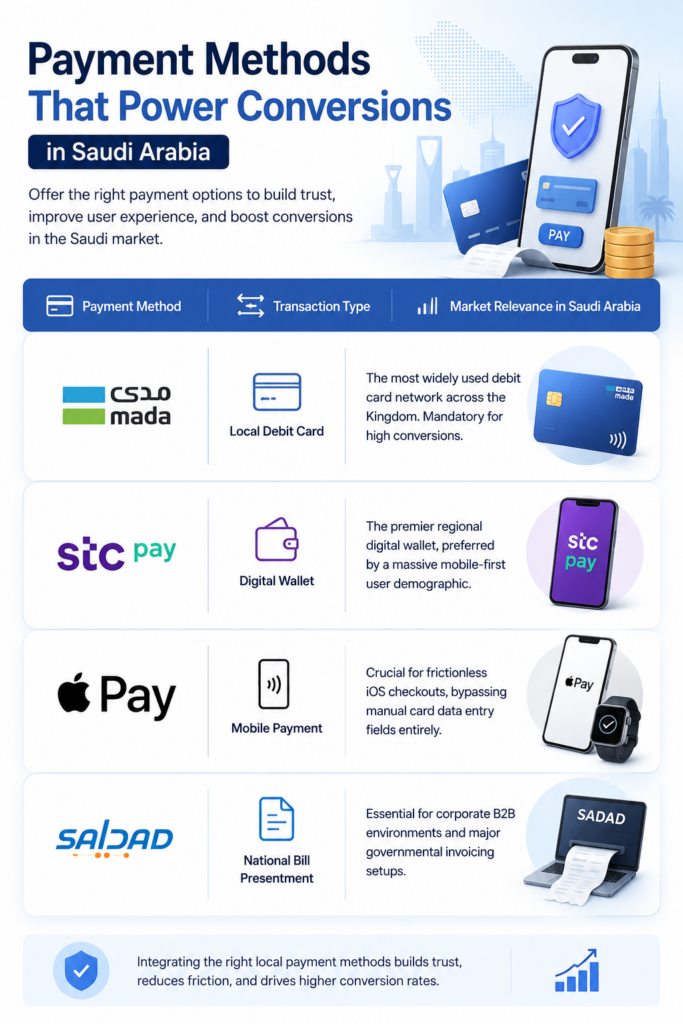
For Saudi businesses, the payment experience should be fast, mobile-friendly, and suitable for local customer preferences. Depending on the business model, websites may need to support debit cards, credit cards, Apple Pay, STC Pay, Mada, or regional payment providers such as Tap Payments, PayTabs, and Geidea.
A strong payment gateway integration can support:
- Ecommerce checkout payments.
- Online booking payments.
- Subscription or membership payments.
- Invoice payment links.
- Automated payment confirmations.
- Order status updates after payment completion.
- Refund or transaction tracking, depending on the payment provider.
A smooth checkout flow can improve customer trust, reduce payment delays, and lower friction during the buying journey.
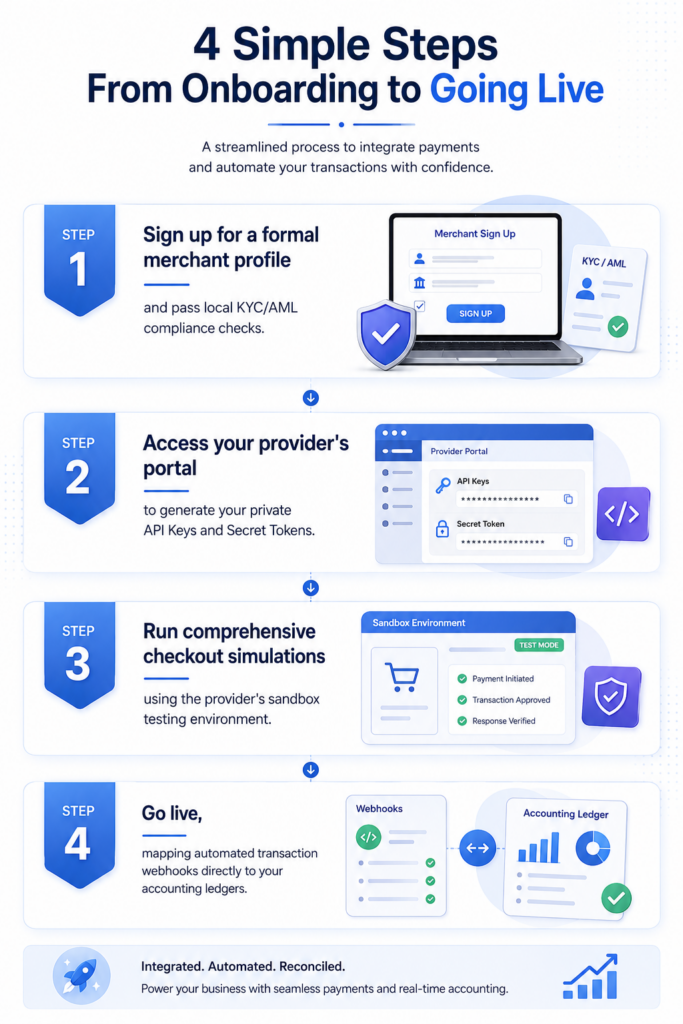
Technical Integration Methods
The right integration method depends on your website platform, business systems, and level of customization required. A reliable integration plan should also consider performance, security, scalability, and how the integration will be maintained after launch.
Common methods include:
- Pre-built modules and plugins: Useful for platforms such as WooCommerce, Magento, or Shopify where payment gateways, CRM tools, and ecommerce extensions may already offer ready-made integrations.
- Direct API or SDK integration: Suitable for custom websites, enterprise platforms, or advanced business workflows that need deeper control over data transfer and user experience.
- Middleware or iPaaS platforms: Useful when a business needs to connect multiple systems, manage large data volumes, or reduce the complexity of point-to-point integrations.
- Webhooks: Useful for real-time updates, such as payment confirmation, order status changes, new lead alerts, and inventory updates.
Before choosing a method, businesses should review API documentation, security requirements, data structure, scalability needs, and long-term maintenance requirements.
API Integration Use Cases by Industry
API integration becomes more valuable when it is planned around real business workflows. Here are common examples:
Ecommerce businesses can connect online orders with ERP, inventory, payment gateways, delivery partners, and customer notifications.
Real estate companies can send property enquiries from the website directly into CRM and assign leads to sales teams based on location, property type, or campaign source.
Healthcare providers can connect appointment forms with booking systems and automate patient reminders through SMS, email, or WhatsApp.
B2B companies can sync enquiries, customer records, quotation requests, product catalogues, pricing data, and sales follow-ups.
Service businesses can automate lead capture, payment collection, booking confirmations, and customer communication workflows.
Key Benefits of API Integration for Growing Businesses
Investing in API integration services in Saudi Arabia can create measurable improvements across daily business operations.
- Better operational efficiency: Teams spend less time copying data manually and more time focusing on sales, service, and growth.
- Faster customer response times: Website enquiries, orders, and service requests can reach the right team instantly.
- Improved data accuracy: Automated data transfer reduces human error and duplicate records.
- Smoother customer experience: Customers receive faster confirmations, better communication, and more reliable service.
- Better sales tracking: CRM and analytics integrations help teams understand where leads come from and how they convert.
- Scalable website functionality: As the business grows, integrations help the website handle more activity without creating extra manual workload.
- Better decision-making: Connected systems give management clearer visibility into sales, operations, payments, and customer behaviour.
Signs Your Business Website Needs API Integration
Many companies struggle with slow, disconnected systems without realizing their operational bottlenecks can be resolved with proper API connectivity. Here are the clear signs your website needs integration services:
- Your team spends hours manually copying lead details from website forms into your CRM.
- Staff members have to re-key customer order data into your ERP after a purchase.
- Online stock levels do not update automatically, which can cause you to sell out-of-stock items accidentally.
- Customers experience delays receiving access or order confirmations after completing a form.
- Your accounting team has to verify invoice payments manually across bank accounts.
- Your sales and operations departments use disconnected systems that don’t share data.
- Creating business performance reports requires manually pulling and combining data from multiple separate tools.
How Element 8 Helps with API Integration
Building a connected digital platform requires technical planning, secure development, and a clear understanding of business workflows. Element8 SA helps Saudi businesses design and implement custom API integrations that connect websites with the systems they rely on every day.
As an experienced web development company in Saudi Arabia, Element8 SA supports businesses with ERP integration, CRM integration, payment gateway integration, ecommerce automation, logistics connectivity, customer communication workflows, and Saudi-specific integration requirements such as e-invoicing workflows where needed.
For ecommerce brands, Element8 SA can also support custom ecommerce development, platform integrations, secure checkout experiences, and automation workflows that connect online sales with internal operations.
For larger organizations, Element8 SA provides enterprise web development support for scalable, secure, and API-ready digital platforms.
Element8 SA can support your API integration project with:
- Requirement analysis and integration planning.
- API documentation review.
- Website and backend system integration.
- ERP, CRM, and payment gateway integration.
- Ecommerce automation and third-party software connectivity.
- Security-focused implementation.
- Sandbox testing and troubleshooting.
- Ongoing monitoring, maintenance, and optimization.
With the right integration strategy, your website can become a connected business platform that supports sales, operations, payments, customer communication, and long-term digital growth.
Looking to connect your website with ERP, CRM, payment gateways, or other business systems? Contact Element8 SA to build a smarter, more connected website for your Saudi business.
Frequently asked questions
What is API integration for a business website?
API integration is the technical process of connecting your website directly to external software applications (such as ERPs, CRMs, and payment gateways). This allows different systems to share data and automatically trigger workflows in real time, removing the need for manual data entry and keeping your records consistent.
Why do Saudi business websites need API integration?
Saudi businesses operate in a highly regulated digital economy. API connectivity is essential for automatic compliance with mandatory government systems such as ZATCA E-invoicing, verifying user identities via Nafath, calculating domestic shipping via SPL National Address arrays, and supporting popular local payment methods such as Mada and STC pay.
Can my website be connected with an ERP system?
Yes. Professional web developers can integrate modern websites with leading ERP systems such as SAP, Oracle, and Odoo. This integration syncs your online orders, live inventory counts, product pricing, and invoicing details automatically across your entire organization.
How does CRM integration help my business?
CRM integration routes your website inquiries and landing page leads directly into platforms like Salesforce or HubSpot the moment a form is filled out. This ensures fast follow-up times, automates lead assignment, and tracks customer interactions throughout your sales pipeline.
Can payment gateways be integrated into my website?
Yes. Integrating payment gateways such as Tap Payments, PayTabs, or Geidea allows you to securely process local debit cards (Mada) and mobile wallets (Apple Pay, STC Pay) on your site. This keeps customers on your domain and creates a fast, frictionless checkout experience.
What other systems can be integrated with a business website?
Beyond ERPs, CRMs, and payment processors, you can connect your website to local logistics providers (SMSA, Aramex) for real-time order tracking, automated customer notification systems via WhatsApp or SMS, mapping applications like Google Maps, and modern AI customer support tools.
Is API integration suitable for small businesses?
Absolutely. While large corporations use custom configurations to handle massive data volumes, small businesses can use native plugins, prebuilt API modules, or lightweight no-code automation platforms to connect their web tools quickly and affordably, without a massive initial investment.
How do I know if my website needs API integration?
Your business likely needs integration if your staff spends significant time manually moving data between systems, if online stock counts don't match your actual inventory, or if your sales and operations teams are working out of disconnected software systems that don't share information.
Is API integration secure?
API integration can be secure when implemented properly. A professional development team should use secure authentication, encrypted communication, data validation, access controls, sandbox testing, and regular monitoring to protect business and customer data.
How can Element 8 help with API integration?
Element8 SA helps Saudi businesses connect their websites with ERP systems, CRM platforms, payment gateways, ecommerce tools, logistics platforms, communication systems, and Saudi-specific workflows. The team can support planning, development, testing, troubleshooting, and ongoing optimization.