Intro: Saudi Arabia’s Digital Landscape Has Changed — Have You?
Saudi Arabia is no longer a secondary market for digital brands — it’s a frontline opportunity. With Vision 2030 accelerating economic diversification, a young mobile-native population, and soaring e-commerce and digital service adoption, the Kingdom is setting new standards for how brands should engage online.
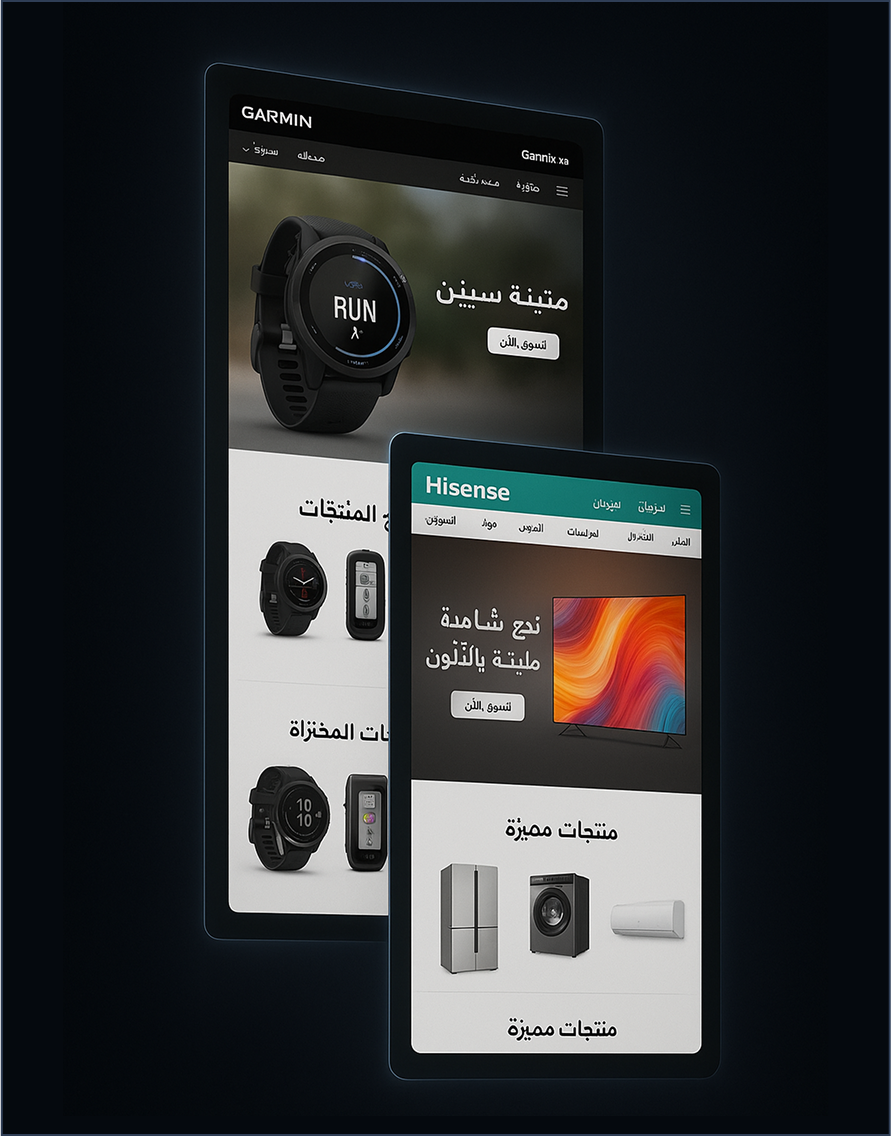
At Element8, we’ve helped global brands like Hisense KSA and Garmin.sa localize their digital presence with exceptional results. Our takeaway? The Saudi audience deserves — and expects — a web experience built uniquely for them.
Let’s break down what makes a Saudi-optimized strategy essential in 2025, and how your brand can avoid the pitfalls we often see from global rollouts.
Saudi Arabia Users Think, Search, and Click Differently
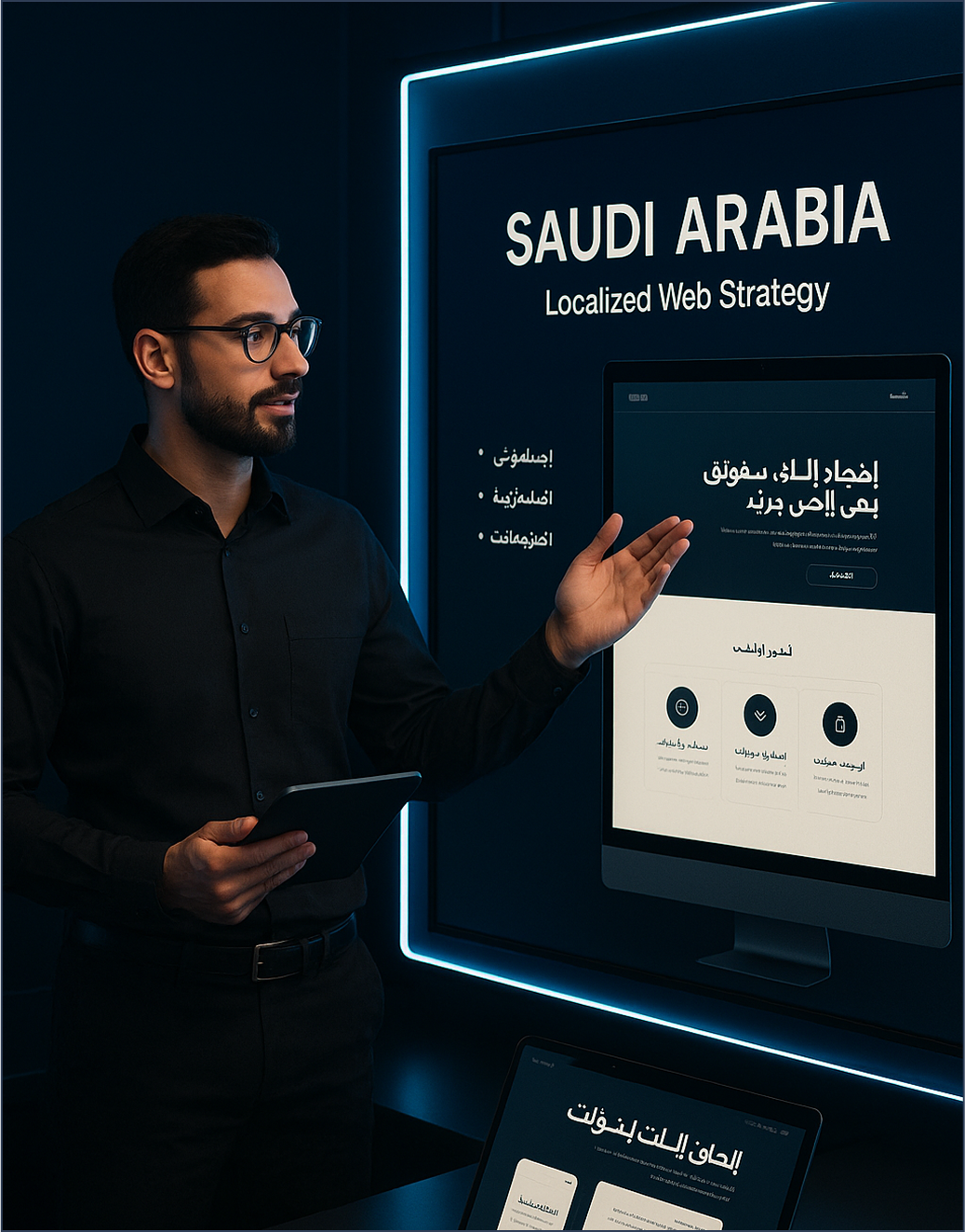
1. Arabic-First Isn’t a Toggle — It’s the Default
In most global sites, Arabic is buried in a language switcher or handled via basic translation plugins. That approach is a guaranteed UX failure in Saudi.
Here’s why:
- Arabic is the default language for most Saudi users — not a fallback.
- RTL design (right-to-left) must be native, not flipped CSS.
- Typography, spacing, and microcopy need to match formal, trust-driven tone.
- Translation alone misses nuance — Arabic content must be written, not just translated.
In our work with Hisense KSA, we built an Arabic-first site structure where layout, buttons, and content were designed ground-up for Saudi users. No shortcuts.
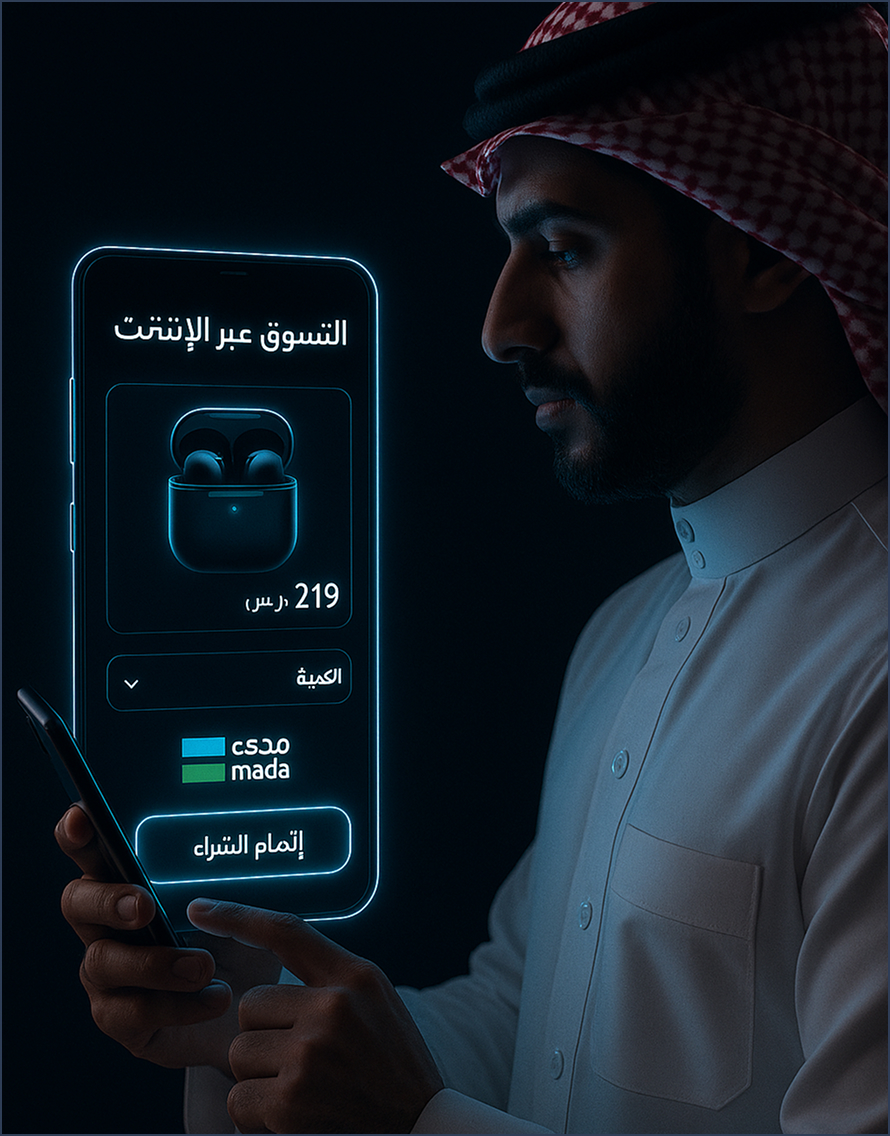
2. Mobile Is the Primary Platform — Not Desktop
In KSA, 90%+ of internet access is mobile-first. And for many users, desktop browsing is rare or nonexistent. If your mobile UX feels like a stripped-down version of your desktop site, you’ve already lost.
For Garmin.sa, we crafted an ultra-light mobile architecture that:
- Prioritized fast loading on 4G networks
- Designed touch-friendly CTAs and product filtering
- Ensured secure, low-friction checkout flows
- Kept core interactions above the fold
A responsive site isn’t enough. Mobile-first must drive your design and performance decisions.
What Global Brands Get Wrong in KSA — Often Repeatedly
Despite investing millions in global platforms, many brands underperform in Saudi. Here’s why:
1. Copy-Paste Templates from Global Rollouts
Big brands often reuse their global web templates across all regions — but that rarely works in KSA. The problems:
- Content layout doesn’t align with RTL reading patterns
- Navigation doesn’t reflect how Saudi users browse or shop
- Forms ask for fields irrelevant to KSA (e.g. postcode formats)
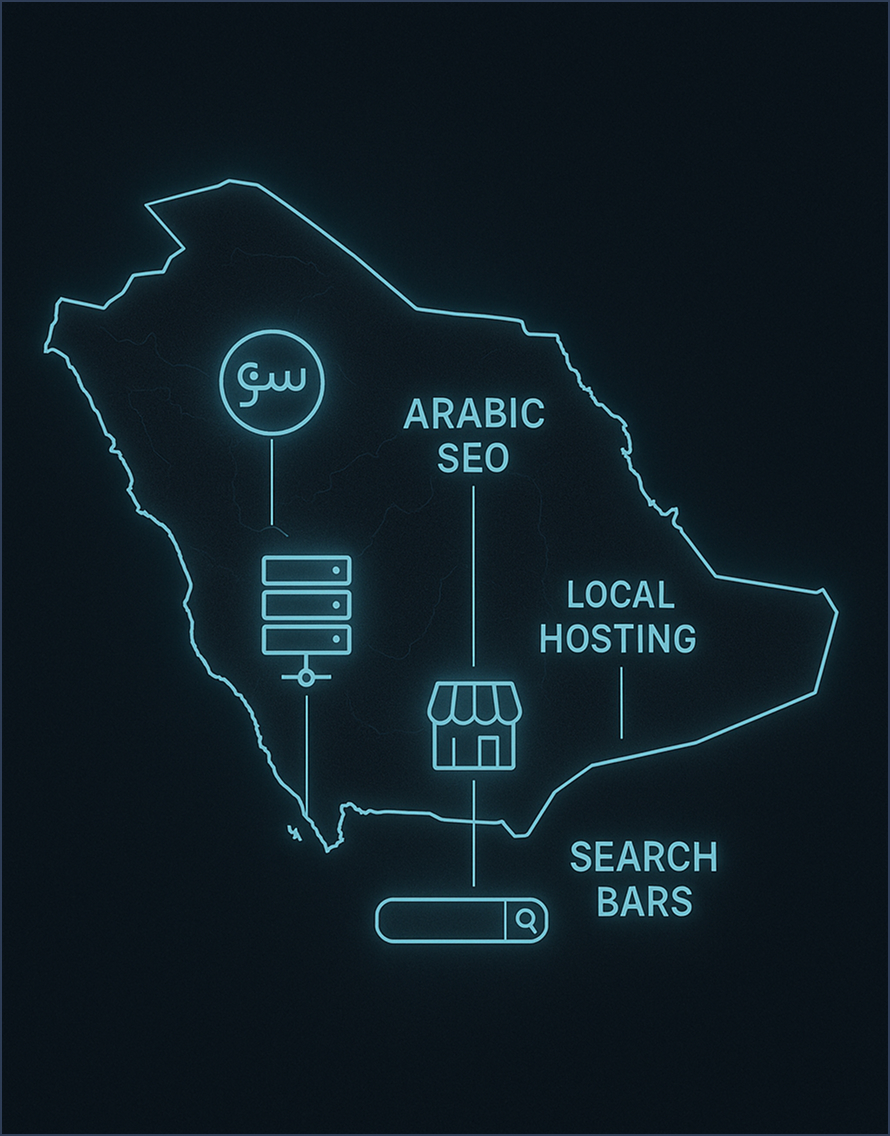
2. Lack of Local SEO Signals
Even a beautifully designed site can be invisible to Saudi users if it lacks:
- Arabic metadata and hreflang
- Hosting within the region (for speed + search signals)
- Proper use of Arabic schema markup
- Local business presence (Google My Business, address in footer)
No localization = no visibility.
3. Ignoring Regional UX Expectations
Saudi users are used to seeing:
- Local payment options like Mada and STC Pay
- Arabic calendars
- Familiar social proof (reviews, logos, influencers relevant
to the region) - Visual cues aligned with local culture (color psychology, imagery, modesty)
Missing these elements creates friction — and trust drops fast.
Case Study: Localizing Garmin for the Saudi Market
When we were approached to build Garmin’s Saudi website, our brief wasn’t just to “translate and launch.” It was to reimagine Garmin’s digital presence specifically for the Saudi audience.
Challenges:
- Arabic product content and specs needed to be accurate, structured, and searchable
- Global imagery had to be filtered for cultural alignment
- Users expected <b>local pricing, currency, and payment methods</b>
Our Solution:
- Fully Arabic-first layout, not just mirrored English
- Custom-built e-commerce modules optimized for mobile
- Integration of Mada payment gateway
- Lightweight front-end architecture for high-speed mobile performance
- Local SEO structure with Arabic slugs, metadata, and sitemap
The result: increased product engagement, lower bounce rate on mobile, and dramatically improved load times.
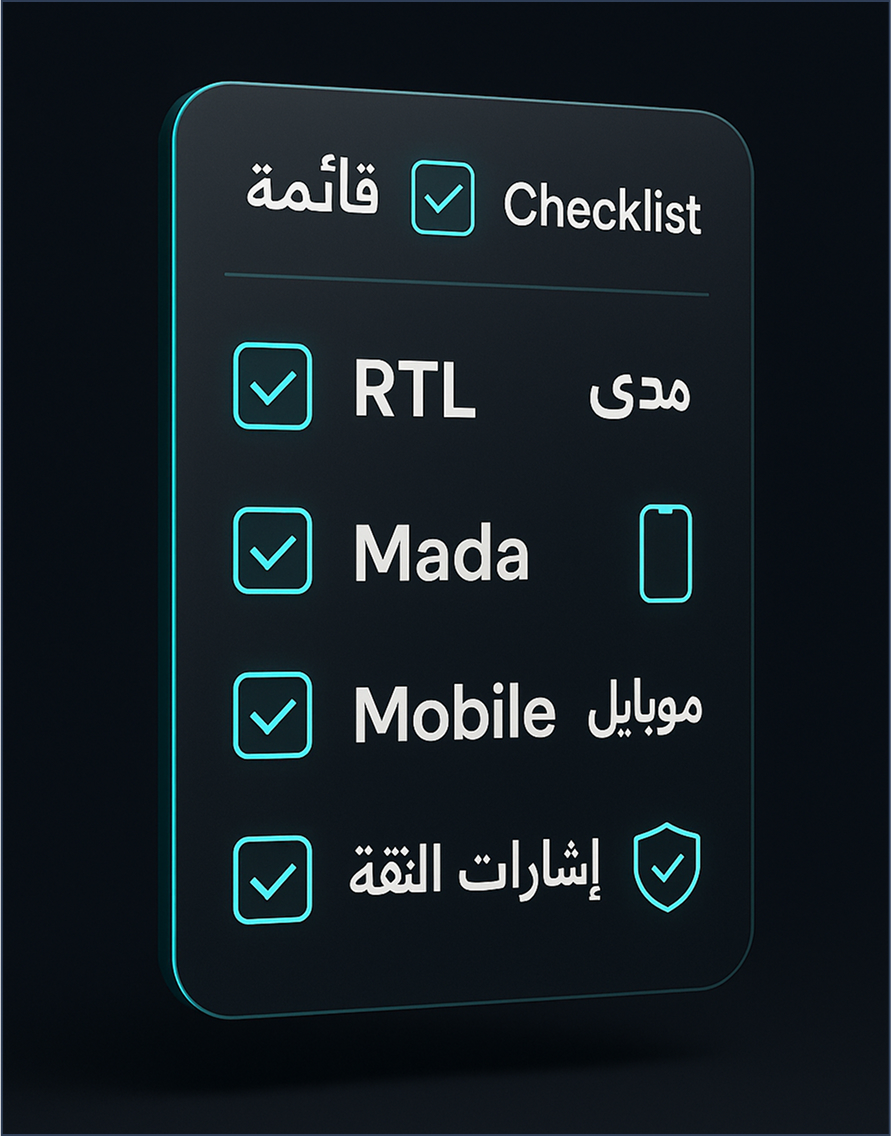
Checklist: What Global Brands Must Do Before Launching in Saudi
Here’s a condensed audit list we recommend for any brand entering the Saudi digital market:
| Area | What to Check |
|---|---|
| Language | Arabic as default, not an add-on. Native copy, not machine translation. |
| UX/UI | Designed in RTL from the start. Arabic-friendly fonts, spacing, and CTAs. |
| SEO | Arabic hreflang, KSA-specific keywords, localized schema, local hosting. |
| Payments | Integration with Mada, STC Pay, and local logistics options. |
| Mobile | Touch-first design, image compression, performance tuning. |
| Trust Cues | Reviews, awards, influencer UGC relevant to KSA users. |
| Cultural Fit | Visuals that respect Saudi social norms (modesty, family-centric, professional). |
Enterprise Architecture That Scales in Saudi
Localization doesn’t mean sacrificing performance. We help brands scale across KSA using:
- Headless CMS or modular frameworks like Next.js
- Custom Laravel backends for enterprise control
- Optimized CDN & hosting setup (region-specific)
- Arabic schema + SEO tooling built into admin dashboards
- Multilingual product catalogs with structured data
Whether you’re a retail giant or a B2B enterprise, we adapt the stack without losing brand integrity or global compliance.
We’ve Done It for Hisense and Garmin. We Can Do It for You.
Our Saudi portfolio includes successful launches for:
- <a href="https://www.hisenseksa.com/"><strong>HisenseKSA.com</strong></a> — a fully localized brand presence for one of the world’s leading electronics brands
- <a href="https://www.garmin.sa/"><strong>Garmin.sa</strong></a> — e-commerce built for Saudi mobile users, with deep localization from UX to checkout
These weren’t just translations — they were full reimaginings of the user journey, built to perform in Saudi Arabia’s unique environment.
Looking for a Saudi-Optimized Web Strategy?
Whether you’re a luxury automotive brand, a global electronics manufacturer, or an enterprise SaaS company expanding to the GCC — we help you launch smart, fast, and culturally on-point.
Explore Our Saudi Arabia Web Design Services
Final Thoughts: Local by Design — Not as an Afterthought
Saudi Arabia is no longer a “later” market — it’s where digital opportunity is happening now. But winning here means rethinking how you design, write, build, and launch
Global brands that adapt win attention, trust, and market share.
Those that don’t? They disappear under local competition.
Let Element8 show you what digital success in KSA looks like.
Written by
Shihab VA, SEO Consultant – Element 8 Saudi Arabia
Helping B2B companies across KSA rank, resonate, and grow through smarter SEO.